
Chapter 1
Family Drama Explodes As Unemployed Brother Takes Over Sister's Space
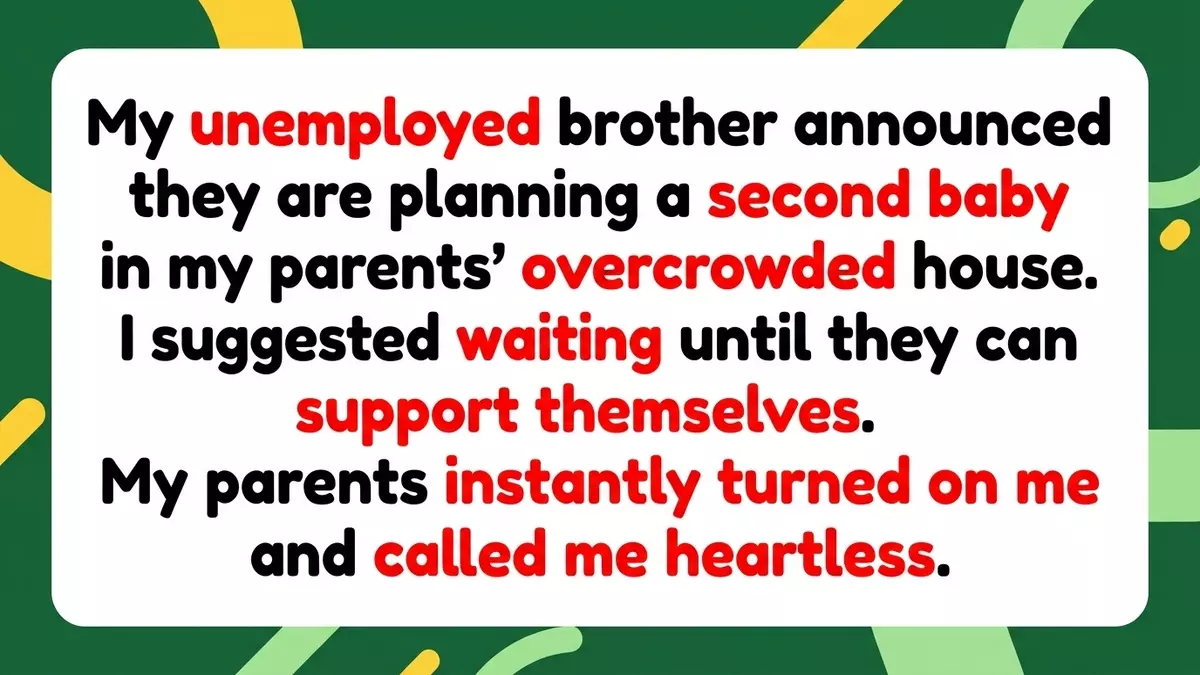
Imagine pulling an all-night study session for a crucial final exam, only to be jolted awake at dawn by a screaming toddler and a mountain of someone else's dirty dishes. For one 22-year-old college student, this chaotic nightmare became her daily reality. Her childhood sanctuary transformed into a high-stress battleground when her older brother, his fiancée, and their toddler moved back into her parents' house.
While she faces strict academic and behavioral standards just to keep her bedroom, her unemployed sibling enjoys a free pass to disrupt the household without consequence. The situation reached a breaking point when the brother announced plans to expand his family, sparking an explosive confrontation that exposed deep-seated parental favoritism.
Family Drama Explodes As Unemployed Brother Takes Over Sister's Space
The Reality of Multi-Generational Housing Stress
Living in a multi-generational household is rarely easy, but when financial dependence and unequal expectations collide, it creates a recipe for domestic disaster.
A Student’s Sanity Under Siege
To survive the brutal modern rental market, many young adults choose to live at home during their university years. However, this student found herself performing unpaid domestic labor just to maintain a baseline of sanity. Instead of memorizing lecture notes, she spent her limited free time cleaning up food scraps and picking up toys scattered by her brother's family.
The stark contrast in house rules turned the home into an environment where personal boundaries simply do not exist. Desperate to protect her academic future and secure just one night of uninterrupted sleep, she finally spoke up during a family gathering.
The Pregnancy Announcement That Sparked a Fight
The tipping point arrived when the unemployed brother and his partner joyfully announced they were planning for baby number two. Unable to contain her frustration, the student suggested they wait until they were financially stable and living independently before bringing another child into the overcrowded house.
The reaction from her parents was immediate and fierce. Instead of validating her concerns about space and resources, they rallied around the brother, accusing the sister of being selfish and heartless. This explosive defensive reaction exposed a painful reality: the family dynamic was heavily skewed in favor of the enabling sibling.
The Psychology of Parental Enablement and Favoritism
What causes parents to turn against a hardworking, independent child to shield an unemployed adult sibling? Family systems theory offers profound insights into these toxic household environments.