
Chapter 1
PART 1
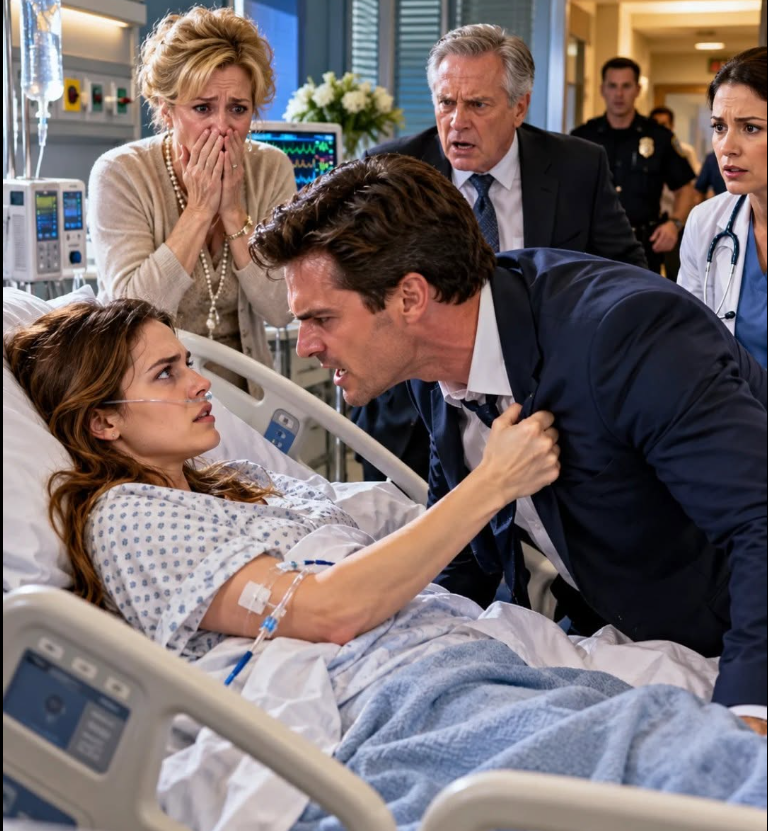
I opened my eyes in the ICU — and heard the three people I trusted most whisper, “It’s all falling into place.”
So I didn’t move. I didn’t speak. I just listened.
When awareness crept back in, everything was white light and rhythmic beeping. Ceiling panels vibrated softly overhead. A monitor pulsed beside me. My body felt impossibly heavy, as if I were trapped beneath stone. Oxygen cooled my nose. Pain sparked when I tried to swallow, so I kept my eyes shut.
Footsteps squeaked across tile. A plastic bag rustled. The air smelled sharply of antiseptic.
Then memory struck like lightning — rain slashing across my windshield, headlights exploding against slick pavement, the steering wheel wrenching sideways in my hands.
The crash.
The dark.
Voices anchored me to the present.
“The ICU was the smart choice,” my husband, Caleb, said evenly. Too evenly. “It keeps everything contained.”
My mother gave a small laugh. “And it makes it serious. No one questions serious.”
My father’s voice followed. “What about the police?”
“Single-vehicle accident,” Caleb answered smoothly. “Hydroplaning. No witnesses. Her phone didn’t survive. It’s clean.”
Clean.
My heart hammered, but I forced myself to stay limp.
If they thought I was unconscious, they’d keep talking.
“She’s never suspected anything,” my mother added lightly. “Why would she now?”
Caleb exhaled in satisfaction. “Exactly. Everything’s lining up.”
My father asked, almost casually, “So what happens next?”
“Neurology comes at sunrise,” Caleb replied. “If she doesn’t respond, we begin the quality-of-life conversation. Diane, you’ll mention how she always feared being dependent on machines.”
“I can handle that,” my mother said confidently. “I’m her mother.”
“And the paperwork?” my father pressed.
I heard a faint tap — paper against clipboard.
“Medical proxy. Durable power of attorney,” Caleb said. “Signed last month.”
Last month.
A memory surfaced: dinner at my parents’ house. Caleb sliding documents toward me. “Refinancing updates,” he’d called them. Routine. Harmless.
I had signed without reading carefully.
And now I understood.
They weren’t waiting to see if I survived.
They were waiting to decide if I was worth keeping alive.
But they made one mistake.
I wasn’t unconscious.
And at sunrise, when the neurologist leaned over and said, “If you can hear me, squeeze my hand,” I did.
The room went very, very quiet.
What I did next — and who I called once I could speak — changed everything.