
Chapter 1
PART 1
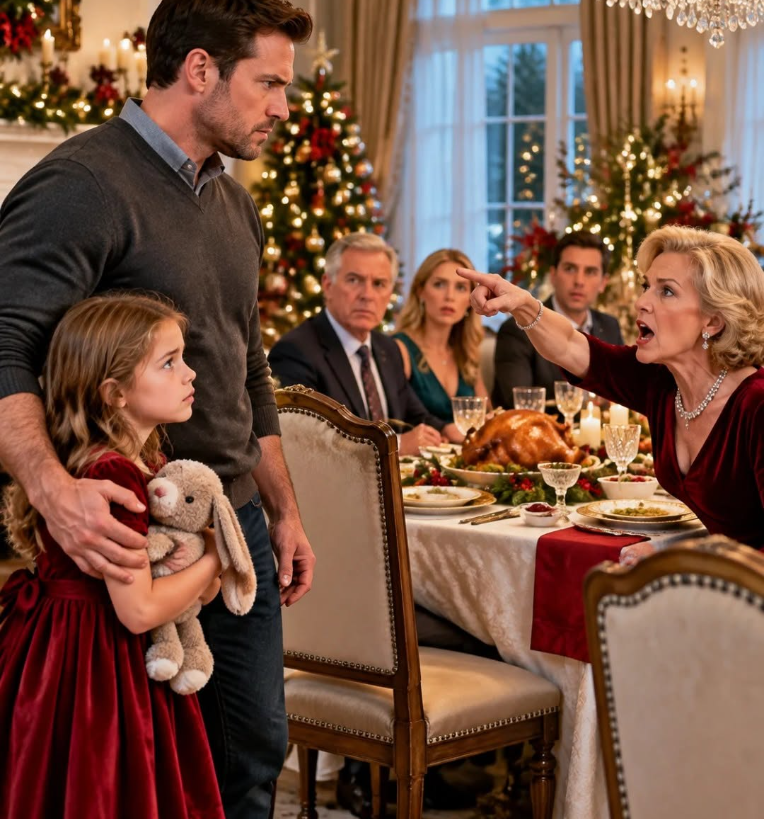
My family told me there was no room for my eight-year-old daughter at Christmas dinner, but they still expected me to pay for everything. Three days later, an accidental voicemail exposed their real plan.
My mother sent me a message explaining that my eight-year-old daughter and I wouldn’t have seats at Christmas dinner because my sister’s future in-laws were coming.
Minutes later, my sister added:
“You’re still covering the food, right? Just like you always do.”
Then Dad joined the conversation.
“Don’t make a big deal out of this, Wes. Your mother has enough to worry about. And don’t forget the Christmas gift you promised me.”
I stared at my phone.
For years, I’d helped my parents pay their bills, organized every holiday gathering, and bought expensive presents for everyone.
Yet somehow, my little girl and I weren’t important enough to have two chairs at the family table.
I didn’t respond.
Three days later, however, my father accidentally left me a voicemail that recorded a private conversation.
What I heard was far worse than an argument over Christmas seating.
My family had been planning something behind my back.
And when my sister explained what she intended to make me sign on Christmas night, I realized that excluding us from dinner was only part of a much bigger scheme.
My name is Wesley Carter, and I’m a respiratory therapist living in Asheville, North Carolina.
I’m also a widowed father raising my eight-year-old daughter, Luna.
That December evening, I was sitting in my car outside the hospital after an exhausting shift.
Rain tapped against the windshield, and all I wanted was to get home, take a shower, and spend a quiet evening with my daughter.
Then my phone vibrated.
A message had appeared in our family Christmas group chat.
Mom wrote:
“Wes, sweetheart, we need to make a slight adjustment to our Christmas plans. Since Ainsley’s fiancé and his parents will be joining us, there won’t be enough room for you and Luna at the main dining table. I’m sure you understand.”
I read the message twice.
At first, I assumed there had been a misunderstanding.
My parents owned a spacious house with a formal dining room, a breakfast area, and enough extra chairs to accommodate a small neighborhood gathering.
We’d hosted nearly twenty guests there before.
Surely they could find room for two more.
Then my younger sister, Ainsley, replied.
“That doesn’t change the food arrangements, though. You’re still paying for dinner.”
Before I could process that, Dad added:
“Don’t upset your mother over something so minor. And remember that watch I wanted for Christmas.”
I sat motionless.
Mom sent another message.
“We thought you and Luna could eat in the breakfast room after you finish helping in the kitchen. It might actually be more comfortable for her.”
I stared at one particular phrase.
After you finish helping in the kitchen.
I’d already ordered the turkey.
Paid the deposit for three bakery pies.
Arranged the floral centerpiece Mom had personally selected.
I’d even requested Christmas Day off months earlier so I could prepare their elaborate holiday meal.
Apparently, I was still welcome to cook, serve, and pay.
I simply wasn’t welcome to sit with everyone else.
I placed my phone facedown and drove home.
Luna greeted me at the door wearing purple pajamas and mismatched socks.
“Daddy! I made a discovery!”
Despite everything, I smiled.
“What did you discover?”
“Socks slide farther across wooden floors when you push them without wearing them!”
“That’s very scientific.”
“I wrote down the results!”
She took my hand and proudly led me to the kitchen table.
Her observation notebook lay open beside a plate of apple slices.
She’d drawn a moth with brown wings and tiny golden markings.
“I saw one near the porch light,” she explained. “I’m trying to figure out what species it was.”
I sat beside her.
“That’s beautiful, sweetheart.”
Luna smiled.
“Most people think moths are boring. But that’s because they don’t look carefully enough.”
My daughter has always noticed things other people overlook.
She’s autistic and loves predictable routines, clear explanations, and detailed conversations about her favorite subjects.
Sometimes she hums when she’s concentrating.
When she’s excited, her hands move quickly.
And once she starts talking about insects or astronomy, she can teach me things I’d never even considered.
I love every minute of it.
Unfortunately, my family rarely demonstrated the same patience.
At gatherings, someone was always asking her to be quieter.
Or telling her to stop moving her hands.
Or suggesting I take her into another room.
I’d spent years explaining that she wasn’t doing anything wrong.
She simply experienced certain situations differently.
Still, somewhere along the way, I’d begun making those explanations in an apologetic voice.
As though my daughter needed permission to be herself.
That evening, while coloring her moth, Luna suddenly looked up.
“Daddy, do you know where we’re eating Christmas dinner?”
“We’re still deciding, sweetheart.”
She nodded.
Then she asked a question that made my heart ache.
“Will you sit beside me this year?”
I stopped.
Last Christmas, I’d spent nearly the entire meal serving food, carving turkey, and helping in the kitchen.
Luna had eaten at the far end of the table.
By the time I finally joined her, most of the family had already finished.
“Of course I’ll sit beside you,” I promised.
She studied my face.
“At the big table?”
For a moment, I couldn’t answer.
Then I pulled my chair closer to hers.
“Wherever we celebrate Christmas, you and I will sit together.”
She smiled and returned to her drawing.
But her simple request stayed with me for the rest of the evening.
After Luna went to bed, I opened the folder containing our holiday expenses.
I earn approximately $68,000 annually.
Between our mortgage, childcare, groceries, and ordinary living costs, I have to budget carefully.
Yet for four consecutive years, I’d paid for nearly everything associated with my parents’ Christmas celebration.
It started when Dad’s insurance business encountered financial problems.
Mom asked if I could help with holiday expenses.
I agreed.
The following year, she asked again.
Eventually, everyone simply assumed I would handle it.
I examined the receipts.
Turkey: $186.
Bakery pies: $142.
Flowers: $230.
Wine: $164.
Then came the gifts.
Dad wanted an expensive blue-faced watch.
Mom had requested a designer leather handbag.
Ainsley wanted a pistachio-green stand mixer for the home she planned to share with her fiancé, Brooks.
When I calculated everything, the total reached $4,291.
More than four thousand dollars.
For a Christmas dinner where my own daughter wasn’t guaranteed a chair.
I closed the folder.
Then I opened my banking application.
Another familiar payment appeared.
Mortgage payment: $1,412.
It wasn’t for my house.
It was for my parents’.
Four years earlier, they’d nearly lost their beautiful brick home in Asheville’s Grove Park neighborhood.
Dad’s business had struggled, and he’d fallen behind on the mortgage.
When Mom called me crying, I stepped in.
I used $76,400 from the life insurance money my late wife, Mara, had left behind.
That money had originally been intended to support Luna’s future.
But I couldn’t bear the thought of my parents losing their home.
I also agreed to take responsibility for their refinanced mortgage.
Our attorney insisted that my name be included on the property deed to protect my contribution.
Mom and Dad promised to cover half the monthly payments.
They managed it for three months.
Afterward, I paid everything myself.
They asked me not to mention the arrangement to friends or relatives.
They were embarrassed about their financial difficulties.
So I kept their secret.
For years, I’d protected their pride.
Now I was struggling to understand how those same people could treat my daughter as though she were an inconvenience.
The following evening, I searched my email for an old catering receipt.
Instead, I discovered an archived conversation I’d forgotten existed.
Someone had accidentally included me in an email exchange between Mom and Ainsley the previous Christmas.
The subject concerned holiday seating arrangements.
Curious, I opened it.
Then I read something that made my stomach tighten.
Ainsley had specifically asked Mom to seat Luna and me away from the main dining table.
Her reason?
She didn’t want Brooks’s mother noticing Luna’s humming or the excited movements she sometimes made with her hands.
My sister suggested I wouldn’t mind because I’d be busy preparing the meal anyway.
I read the email again.
Suddenly, I remembered last Christmas.
Luna had eaten from a paper plate at the kitchen island while everyone else enjoyed the formal dinner.
Mom had explained that the seating arrangements had already been finalized.
I’d believed her.
I’d been too busy helping in the kitchen to question it.
Now I understood.
My daughter hadn’t been seated separately to make her comfortable.
She’d been deliberately kept away from certain guests because my sister worried about appearances.
I closed my laptop.
Then I walked quietly down the hallway and stopped outside Luna’s bedroom.
Her door was slightly open.
She was sleeping peacefully beneath a blanket covered in tiny stars.
I stood there thinking about every occasion when I’d encouraged her to be patient with relatives who made little effort to understand her.
I thought about my wife’s savings.
The mortgage payments.
The Christmas expenses.
And the little girl who wanted nothing more than to sit beside her father.
For the first time, I began questioning why I’d worked so hard to maintain family traditions that repeatedly left us feeling unwelcome.
I still didn’t respond to the Christmas group chat.
By the third day, Mom had called seven times.
Her first voicemail sounded affectionate.
“Wes, sweetheart, I think there’s been a misunderstanding. Call me.”
The next one was less friendly.
“Wesley, you’re making this unnecessarily difficult.”
Eventually, she reminded me that the turkey order needed confirming.
Ainsley sent another message.
“Are you seriously refusing to answer because of a seating arrangement?”
I ignored that too.
Then Dad called during my lunch break at the hospital.
I was halfway through a sandwich when his voicemail appeared.
I nearly deleted it.
Instead, I pressed play.
“Wes, it’s Dad. Call me back. We need to sort this out before the Pembertons arrive. Your mother’s getting upset.”
I was about to stop listening.
Then I heard a chair scraping in the background.
Someone spoke.
It was Ainsley.
“Did he answer?”
“No,” Dad replied.
There was a muffled sound, as though he’d placed his phone on the kitchen counter.
Apparently, he thought the call had ended.
But the voicemail continued recording.
I slowly put down my sandwich.
Ainsley spoke again.
“He’ll get over it. He always does. He’ll complain for a few days, then show up with the turkey and act like nothing happened.”
Mom murmured something I couldn’t understand.
Then my sister asked another question.
“Dad, did you get those documents I told you about?”
“Yes. They’re in my briefcase.”
“Good,” Ainsley replied. “Then here’s what we’re going to do on Christmas night.”
I sat perfectly still.
She began discussing paperwork she wanted me to sign after the guests had gone home.
According to their conversation, Dad was supposed to present the documents as routine refinancing paperwork.
But as I listened, I realized they involved more than an ordinary mortgage adjustment.
They concerned the very house I’d helped save from foreclosure.
The same house for which I’d sacrificed my late wife’s savings.
The same house whose monthly mortgage I was still paying.
I listened until the recording ended.
Then I replayed it from the beginning.
This wasn’t simply a disagreement about Christmas seating.
My family had apparently been counting on my generosity while making financial plans that could affect my legal interest in their property.
And they expected me to sign without asking too many questions.
I looked down at the untouched sandwich in front of me.
For years, I’d believed that helping my parents was the right thing to do.
I’d never expected gratitude or special treatment.
But I’d certainly never imagined they might use that generosity against me.
I saved the voicemail.
Then I opened the folder containing my mortgage documents and the deed.
This time, I wasn’t going to accept anyone’s explanation without understanding exactly what I was being asked to sign.
And I wasn’t going to let another Christmas pass with my daughter wondering whether she deserved a place at the family table.