
Chapter 3
My mother sat down slowly in my father’s old chair.
“Someone knew about that plan long before it was public,” Whitfield continued. “Cain Realty has been buying every parcel along the route for six years. Through liens. Failed inspections. Fires. We think the information came from inside the county government. We’ve been building this case very carefully.”
“And I’m a problem,” I said.
“You’re a lieutenant colonel with a temper and a grudge,” Reyes said gently. “If you start kicking doors, defense attorneys will say the federal government sent a soldier to harass a family. I need you to let us work.”
“Did you watch the second video?”
“I did.”
“Then you saw Wade Cain standing there while his son hurt a seventy-five-year-old woman.”
“I saw it,” Reyes said. “And I need it to matter in a courtroom. Not in a parking lot.”
The bell over the front door jangled.
I knew the voice before I saw him.
“Well, look at this. Evelyn’s got company.”
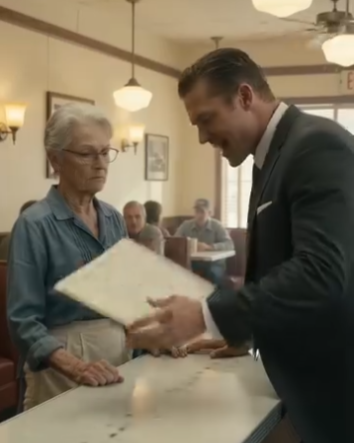
Travis Cain stood at the counter in a camel-colored coat that probably cost more than the diner made in a month. Thirty-two years old, handsome in the way of men who have never once been told no. Two of his friends hovered behind him like they’d been hired.
He looked at the agents. He looked at me. Then he laughed.
“You must be the daughter. The soldier.” He leaned on the counter. “Your mama tripped, sweetheart. Old ladies do that.”
The room went still again. That same stillness I’d seen in the video.
I walked out of the office and stopped two feet from him. I didn’t raise my voice. I didn’t need to.
“Mr. Cain,” I said, “the next time you speak about my mother, you’ll do it under oath.”
For half a second, something flickered behind his eyes. Then he smiled.
“Lady, you’re in Dunmore County now. You don’t outrank anybody here.”
“I’m not here to outrank anyone,” I said. “I’m here to outlast you.”
That was when my mother came out from the back, one arm in a sling, her chin up.
“Travis,” she said, “your coffee’s been on the house for eleven years because your grandmother asked me to look after you. That ends today. Get out of my diner.”
Somebody in a corner booth set down his cup.
Travis’s jaw tightened. He looked around the room, waiting for the town to laugh with him.