
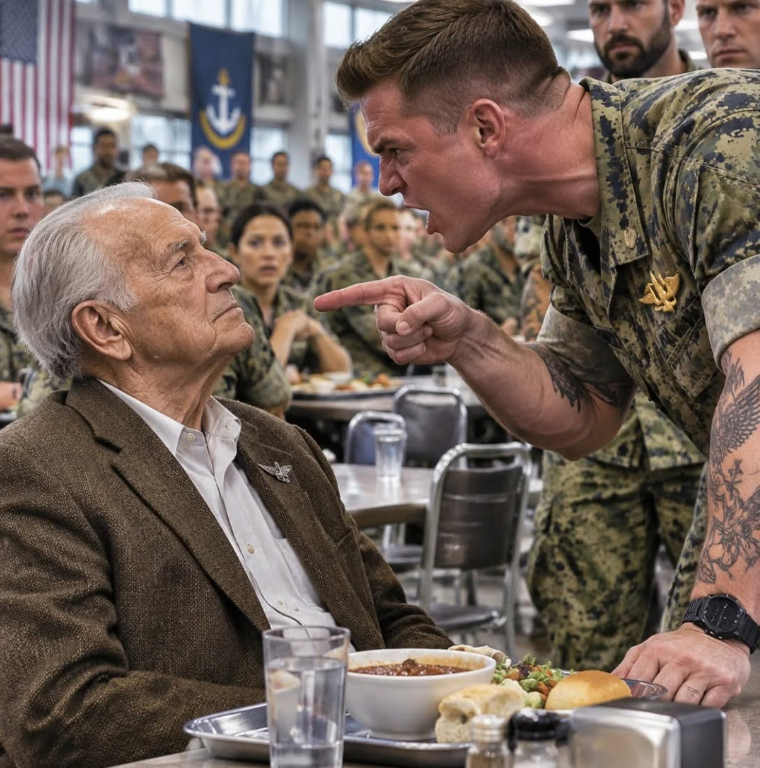
Chapter 4
George reached into his breast pocket and handed over a folded white card.
Delgado opened it. His eyebrows rose a quarter of an inch, which for Frank Delgado was the equivalent of a shout.
The sponsoring signature at the bottom read: Captain M. J. Harlan, Commanding Officer.
The son of the man whose name was going on the building.
“Do you know Captain Harlan, sir?” Delgado asked carefully.
George took back the pass and returned it to his pocket.
“Never met him,” he said. “I was hoping you could tell me why he wanted me here.”
PART 3
The Coronado sun was white and merciless as Delgado walked George out to the visitor lot. The wind off the Pacific smelled of salt and diesel, the same as it had sixty-four years earlier.
George moved slowly but without a cane, his back straight. He stopped beside a dusty 2004 Buick with Arizona plates.
“Drove all the way from Prescott,” he said, as if apologizing for the car. “My wife always said I was too stubborn to fly.”
“Is she with you, sir?”
“Ruth passed four years ago.”
Delgado nodded. He waited, the way good chiefs learn to wait. George reached into his jacket and handed him an envelope. Inside was a single typed sheet.
Saturday they will tell the story of the canal. Someone who was there should hear it told. — A friend.
“No signature,” Delgado said.
“Just the pass. And a motel reservation in Imperial Beach, already paid for.” George took the envelope back. “At my age, Master Chief, you don’t get many invitations. I figured I’d accept this one.”
Delgado looked at the old man for a long moment. “Sir, I have to ask. What Miller said in there. Is any of it true?”
George looked out at the water. “Tommy Reyes died on that canal,” he said. “That part’s true.”
He didn’t say anything else. He didn’t defend himself. And that, more than anything, unsettled Frank Delgado.
“You were a plank owner,” Delgado said quietly. “One of the original sixty.”
“I was a lot of things.” George opened the car door. “Then I was a mess cook. Third class.”
And Delgado understood, suddenly, that it had never been a joke. It had been a sentence. Something handed down and served.
He pulled a card from his wallet and pressed it into George’s hand. “My cell’s on the back. Day or night, sir. I mean that.”