
Chapter 20
But it was real.
Epilogue
Three weeks later, my father lost the election.
It was close. Closer than anyone expected. Some analysts said his speech that night at the Lockwood Grand had cost him support among certain voters who thought it made him look weak. Others said it was the most authentic moment of the entire campaign and had nearly carried him over the line.
He conceded gracefully on election night, in a hotel ballroom not unlike the one where everything had changed.
And in the middle of his concession speech, he said something that made the national news the next morning.
“I didn’t win tonight,” he said. “But a few weeks ago, I almost lost something much more important than an election. And I got it back. So I’m going home a lucky man.”
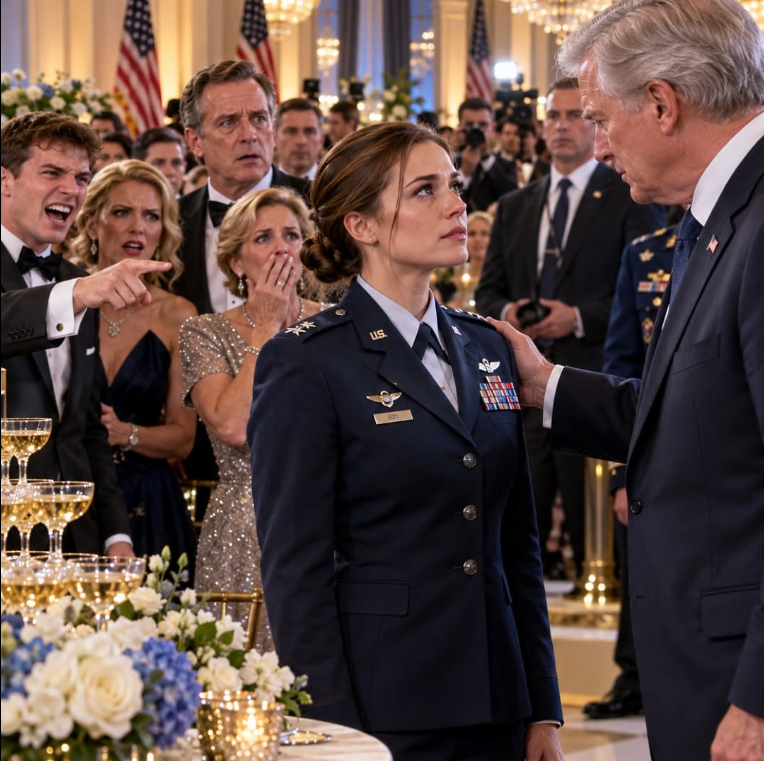
Then he looked straight at me, standing beside my mother and my brother near the front row, in my dress blues.
He didn’t nod this time.
He smiled.
Six months later, my father became the founding director of a nonprofit organization that helps military medical personnel transition back to civilian life. Counseling for those who carry what they’ve seen. Family workshops to teach parents, spouses, and children how to ask the questions nobody knows how to ask. Scholarships for military nurses and medics continuing their education.
He named it the Thomas Rowan Foundation, after his father.
At the opening ceremony, he told his father’s story publicly for the first time. The back porch. The locked doors at night. The afternoon every March at the cemetery. The nineteen-year-old private.
Then he held up the old Combat Medical Badge, which I had loaned him for the occasion, and said, “My father carried his service alone. My daughter doesn’t have to. And neither should anyone else’s.”
Derek, who now donated blood every eight weeks without fail, volunteered at the foundation two Saturdays a month. Aunt Vanessa organized the fundraising luncheons. She was surprisingly good at it.
Ethan handled the legal work for free.
My mother started a support group for military families. It met on Tuesday nights in the community room of her church. Twelve people came the first week. Forty came the third.
As for me, I went back to work.
Back to the cold airplanes and the red lights and the long nights over places I’m still not allowed to name. Back to strangers who needed someone to tell them to stay.