
Chapter 3
“Thank you, Martin.”
He turned to the others with polite neutrality. “Mr. Carter. Mrs. Carter. Derek. Please, have a seat.”
Marjorie took the chair closest to his desk without being asked. Ethan sat beside me and placed his hand on my knee, a gesture that might have looked tender to anyone who didn’t feel how firmly he pressed.
Martin settled behind his desk, opened a thick folder, and folded his hands on top of it.
“Before I read the formal documents,” he said, “George asked that I begin with something else. He was very specific about the order of things today.”
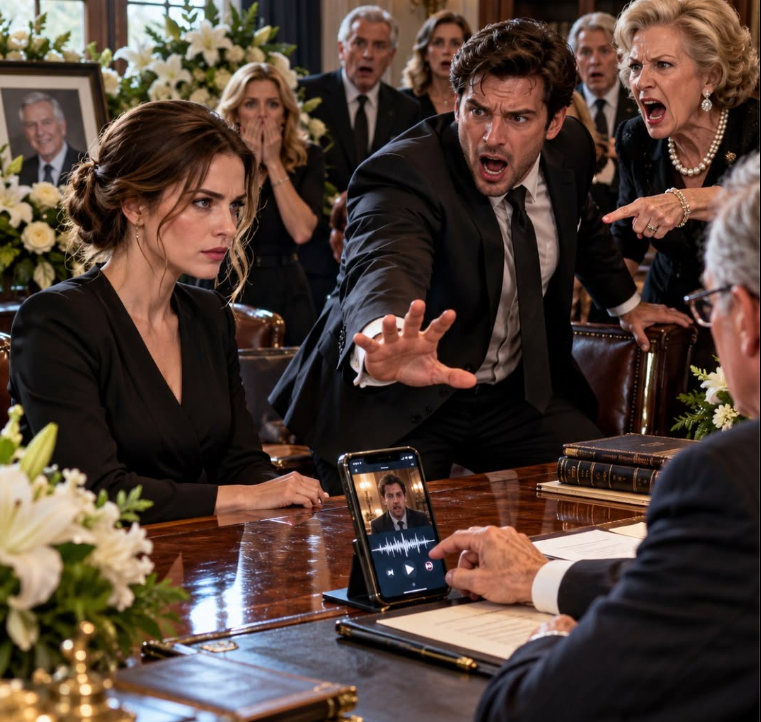
From his desk drawer he took out a phone in a scratched black case. I recognized it instantly. Dad had refused to upgrade it for six years. The corner was cracked from the time he dropped it under a pickup on a lift.
My throat tightened.
Marjorie made a small sound of impatience. “Is this really necessary? We all know George wasn’t a sentimental man.”
“He was more sentimental than you’d think,” Martin said mildly. “But this isn’t sentiment, Mrs. Carter. This is evidence.”
The word landed in the room like a dropped wrench.
Martin set the phone in the center of the desk and pressed play.
For the first few seconds there was only background noise: the hum of an air compressor, the clink of tools, the familiar squeak of the swivel chair in Dad’s shop office. I knew that chair. I had sat in it every afternoon for six years doing invoices.
Then a voice.
Not my father’s.
Ethan’s.
“Once the old man’s gone, Lydia gets everything, and Lydia signs whatever I put in front of her—”
Ethan was on his feet so fast his chair scraped across the floor.
“Turn that off!”
Martin did not move. The recording kept playing.
“—so there’s no point fighting him now,” Ethan’s recorded voice continued. “We just wait. He’s sixty-eight, and he’s not getting any healthier.”
Then Marjorie’s voice, sweet and cold: “And if she hesitates, cry a little. She’s soft. She always folds when someone she loves is upset.”
The room went utterly silent.
Derek turned slowly to look at his mother. Marjorie’s face had gone the color of skim milk.
“That is a private conversation,” Ethan said, his voice rising. “That was recorded without my consent. That’s illegal.”
“In this state,” Martin said calmly, “a business owner may record his own business premises, and George posted notice at the shop entrance and in the office. The sign is still there. I photographed it myself.” He paused. “You were standing in his office, Mr. Carter. Uninvited, according to his notes, while he was at a doctor’s appointment.”