
Chapter 21
“Yes,” Chloe said clearly. “I did. I’ve pleaded guilty to my part. I’ll accept whatever the court decides.” She took a breath. “But I didn’t kill my brother. My husband did. And I won’t let my children grow up believing a lie about who their father is, even if the truth costs me.”
I watched her from the second row and thought: David, you’d be proud of her today.
The jury deliberated for six hours.
Guilty on every count.
At sentencing, the judge gave Grant life without the possibility of parole for the murder of David Whitmore, plus additional federal time for the fraud. Before the sentence was read, he was given the chance to speak. He stood, buttoned his jacket, and looked toward Eleanor.
“I took care of you,” he said. “When nobody else did.”
Eleanor rose from her seat. The courtroom held its breath.
“You took care of me,” she said, her voice steady, “the way a man takes care of a lock he plans to pick.” She sat back down. “I have nothing else to say to you. Ever.”
Chloe received three years of probation, five hundred hours of community service, and mandatory counseling. She completed every hour of the service at a domestic-violence shelter in Monterey and stayed on afterward as a volunteer. Lily and Owen moved with her into a small house four blocks from Eleanor’s. On Sundays, they came to Cypress Point for dinner.
The Whitmore Holdings board recovered thirty-three million of the forty-one million dollars. At my request, Sterling directed a portion of the recovered funds into a new foundation: the David Whitmore Fund, which provides free legal help to widows and widowers facing inheritance disputes from family members. In its first year, it helped two hundred and fourteen families keep their homes.
Three weeks after the verdict, Eleanor asked if she could speak at the dedication of a memorial bench on the Big Sur turnout where David’s car went over the cliff. The same people who had whispered in the cathedral came. Many of them, I suspected, came to see whether she would apologize.
She did.
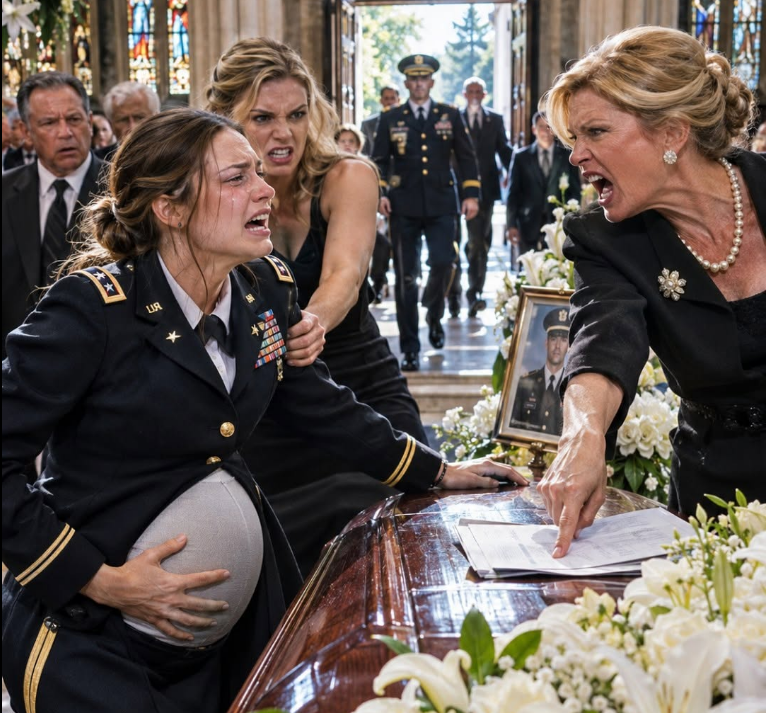
“Eight months ago,” Eleanor said, standing in the wind with her gray hair tied back, “I stood beside my son’s casket and humiliated his wife in front of all of you. I called her a liar and a cheat. I called her unborn child a stranger. I believed a man who wanted to destroy my family because I was too frightened and too proud to believe the woman my son loved.” She turned to me. “Sarah, I was wrong. I was cruel. And you protected my grandson, and you protected me, when I didn’t deserve either. I will never be able to repay that. But I’m going to spend the rest of my life trying.”