
Chapter 13
“They came to my house,” she said. “They went to Lucy’s door. They broke into that nice young man’s apartment. They scared Daniel half to death. Because of me. Because I’ve been quiet.” She twisted the ring once. “I’m done being quiet, Robert.”
Hal didn’t say I told you so. He just picked up his phone and made a call.
The next morning, we sat across from Detective Angela Ruiz at the Montgomery County Detectives’ Bureau in Norristown. She was in her forties, with reading glasses pushed up into dark curly hair and a framed photo of a Little League team on her desk. Hal had worked with her years ago. He said she was the best investigator in the county on elder abuse and financial exploitation, and the most stubborn.
She watched the footage once. Then again, at half speed. Then she read the texts, every one, making notes in a small, neat hand.
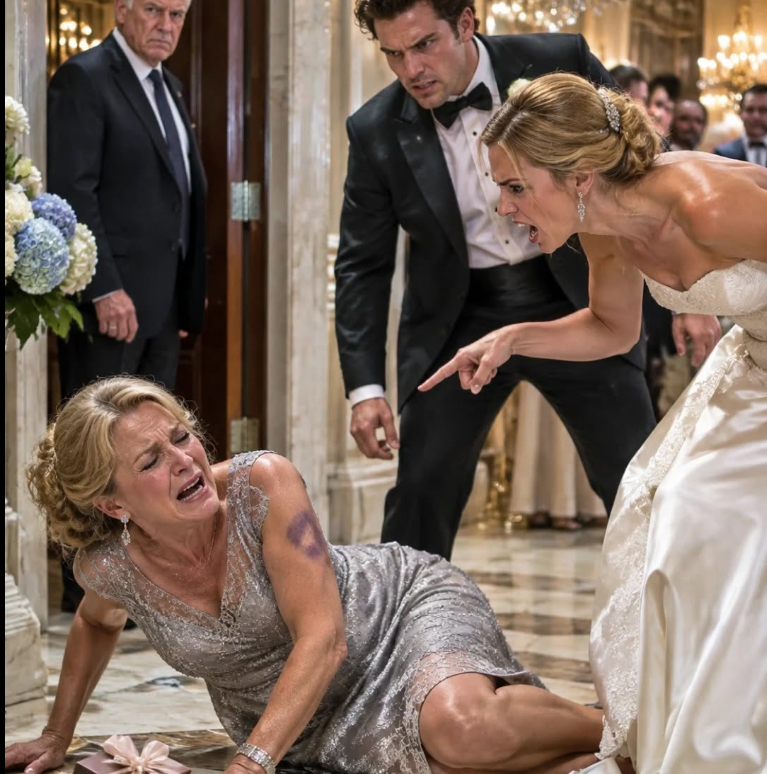
“Mrs. Whitaker,” she said at last, “thank you for coming in. I know how hard this is.” She took off her glasses. “I’m going to be honest with you about what a defense attorney will do with this. There’s no audio. They’ll say you were drunk. They’ll say you were screaming at the bride on her wedding day, that you lunged at her, that your son was protecting his wife. And they’ll say the texts are a family dispute over an inheritance.”
“That’s not what happened,” Ellen said.
“I believe you,” Ruiz said simply. “But I need to be able to prove it to twelve people who don’t know you. The intimidation, the break-ins, the bribe, the Delaware connection, that’s a pattern. Patterns are what convict people like this. But I need someone who’s been inside it to talk.”
That was when Ellen asked Lucy to drive her to Rehoboth Beach.
She didn’t want me to come. “She won’t talk to a man,” Ellen said. “She’ll talk to a mother.”
So I waited in the parking lot of Seaside Gardens Assisted Living for two hours and forty minutes, watching gulls fight over a french fry, while my wife sat in a sunroom with a stranger.
When Ellen finally came out, she was holding a manila envelope against her chest like a hymnal. Lucy walked beside her, eyes red.
Ellen got into the car and didn’t say anything for a while. Then she told me.
Margaret Hollis was eighty-one now, with a silver braid down her back and a walker decorated with a little bicycle bell her great-niece had given her. At first she wouldn’t talk at all. She talked about the weather and the bad coffee and the nurse who sang Motown on the night shift.