
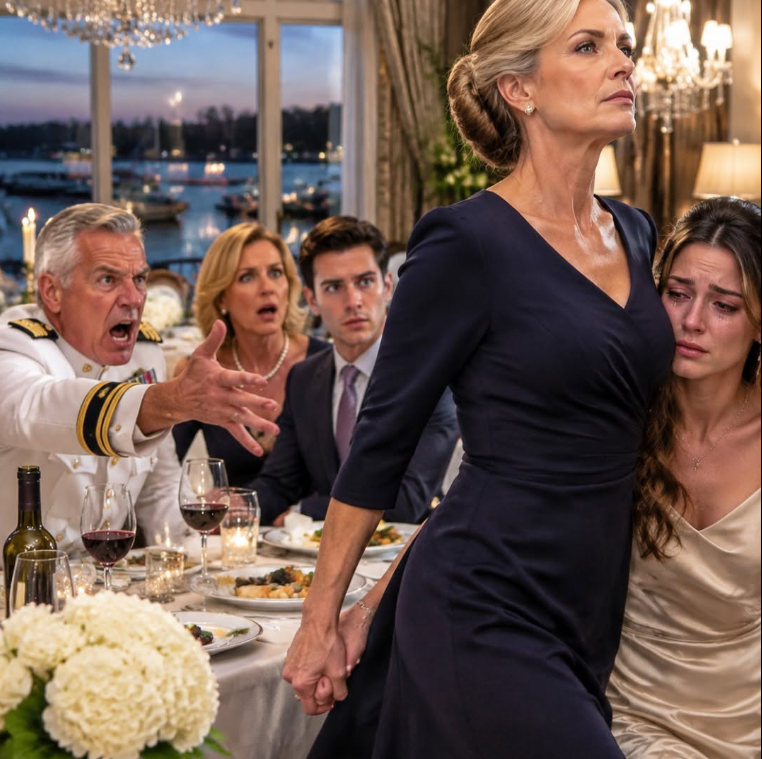
Chapter 4
On Sunday evening, I drove to the Pentagon.
The building is never truly empty, but on Sunday nights the E-Ring corridors hum with a quieter energy. I badged into my office, switched on the desk lamp, and opened the thick folder Colonel Bell had left squared precisely in the center of my blotter.
Captain Richard A. Whitmore. Naval Academy, class of ‘94. Surface warfare officer. Two commands at sea. Currently commanding a regional maintenance center responsible for hundreds of millions of dollars in ship repair contracts. Fitness reports glowing. Recommended without reservation by a vice admiral whose name I recognized.
On paper, he was exactly what I’d asked for.
Then I turned to the last page—the vetting summary.
Most of it was routine. One line was not.
POTENTIAL ADVERSE INFORMATION: Department of Defense Inspector General inquiry currently OPEN regarding candidate’s current command. Details restricted pending investigation. Complainant has requested confidentiality and whistleblower protection.
Beneath it, in Colonel Bell’s neat block handwriting, was a yellow sticky note.
Ma’am—Candidate requested this interview personally and moved his schedule to make it. He has been told only that the Director is “a demanding Army logistician.” Nothing more. —MB
I sat back in my chair.
An open Inspector General investigation. A frightened whistleblower somewhere in Richard Whitmore’s command. And a man who had looked across his own dinner table and decided my daughter wasn’t good enough for his family.
I knew exactly what I had to do on Monday morning.
It just wasn’t what Richard Whitmore would expect.
Forty miles away in Annapolis, a Navy captain was almost certainly polishing his shoes for the most important interview of his career.
He had no idea who would be sitting across the desk.
PART 3
At 0745 on Monday, I stood in front of the mirror in my office’s small private washroom and checked my uniform the way I had every morning for three decades.
Army Green Service Uniform. Ribbons aligned. Three silver stars on each shoulder, catching the fluorescent light.
The woman in the navy dress and pearls was gone. But I wanted to be very clear with myself about one thing: she and this woman were the same person. The stars didn’t make me worth more than I was on Friday night. They only made it harder for people to pretend I wasn’t.
Lieutenant Colonel Grant Pierce, my executive officer, knocked and leaned in. Pierce was forty-one, sharp, ambitious, and the kind of officer who remembered every general’s coffee order and every congressman’s birthday. I’d inherited him from my predecessor and had found him reliable.