
Chapter 3
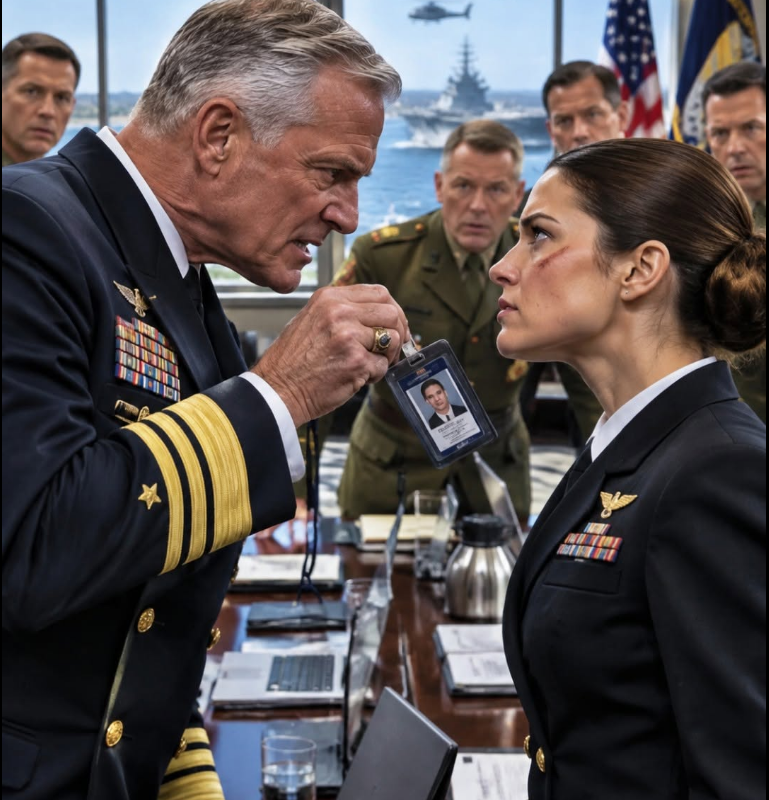
Then I held out my hand, palm up.
“My badge, Admiral.”
For a long second he didn’t move. Then he set it in my palm the way a man sets down a hand of cards he’s just realized he can’t win.
“Effective immediately,” I said, turning to face the room, “all operational logs, communications records, and maintenance files for this command, covering the period of March first through March tenth, are under a preservation hold. Nothing gets edited. Nothing gets archived. Nothing gets deleted. If anyone has a question about that, you may direct it to the Fleet Commander’s office.”
No one had a question.
A tall officer with rimless glasses and a voice as smooth as glass stepped forward from the wall. Captain Dale Whitaker, Harlan’s chief of staff. I’d read his file on the flight from Pearl Harbor. Twenty-six years of service. Never a single blemish. Never a single complaint. That kind of record always made me curious.
“Commander,” Whitaker said warmly, as though we were old friends, “this has clearly been a misunderstanding. Perhaps the admiral and I could take this conversation into his office, where we can all be more comfortable.”
“I’m comfortable right here, Captain.”
His smile didn’t move, but something behind it did.
Harlan finally found his voice again. It was quieter now, but not softer. “You think a piece of paper makes you somebody.”
“No, sir,” I said. “I think the truth will. The paper just gets me through the door.”
I gathered my folder and walked out. My heels were the only sound in that hallway, and I made sure every step landed even.
My deputy, Lieutenant Commander Grant Mercer, fell in beside me the moment I cleared the doors. Thirty-one, sandy-haired, eager in the way that reminded me of myself a decade ago. I’d mentored him for two years. I’d stood in the second row at his wedding.
“Ma’am,” he breathed, half laughing, “that was the most incredible thing I’ve ever seen. Did you see Whitaker’s face?”
“I saw it.”
“What do you need from me?”
“A secure room for the records. A list of everyone on watch the night of March fourth. And coffee that doesn’t taste like it came out of a radiator.”
He grinned. “On it. You’re in the BOQ, room 214, right? I’ll have the files sent there tonight.”
I nodded and kept walking.
At the end of the corridor, the young lieutenant from the conference room was holding the outer door open for us. Up close, he looked even younger. Maybe twenty-six. His nametag read BRANDT.