
Chapter 15
I noticed he had called me Ms. Hale.
I didn't correct him.
The first morning I walked into Mitchell Medical as CEO, the maintenance crew was taking Jason's name off the front of the building.
I stood on the sidewalk and watched them remove it letter by letter. M-I-T-C-H-E-L-L. Each letter was about three feet tall and made of polished brushed steel. They stacked them on a pallet like old furniture.
Six months later, a new name went up in their place.
HALE CARDIAC TECHNOLOGIES
Small letters underneath read: Founded by Thomas and Iris Hale.
When the last letter was bolted into place, I cried right there on the sidewalk, and three of the engineers who had come outside to watch came over and stood beside me without saying a word. One of them, a young woman named Priya who had joined the company straight out of MIT, quietly handed me a tissue.
"My grandmother wears one of your devices," she told me. "It caught her heart attack before it happened. Last year. She's still alive because of it."
I held that tissue in my hand for the rest of the day.
The Trial
Jason's lawyers fought for eight months.
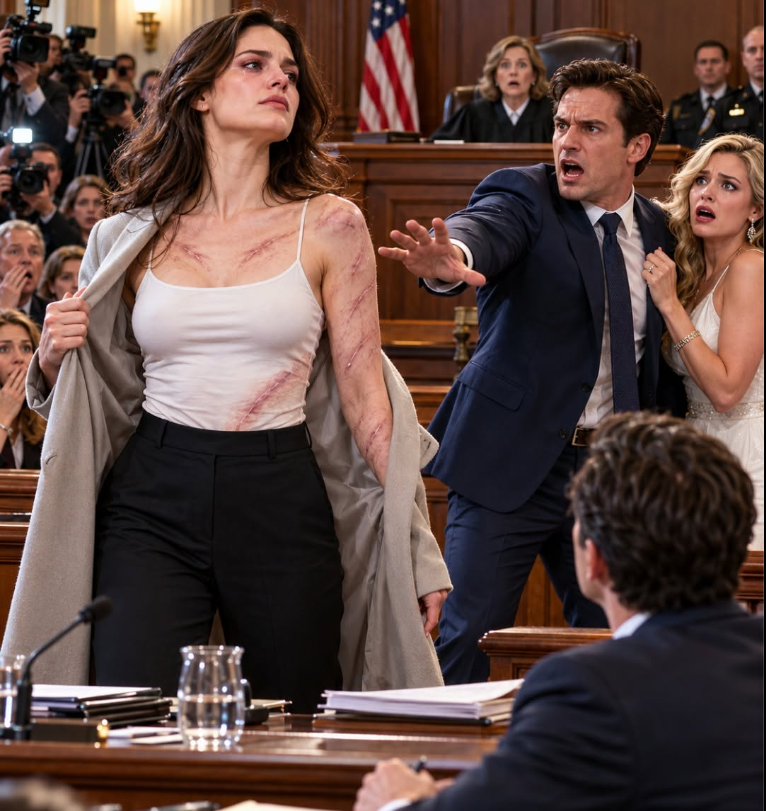
They tried everything. They argued the triage form was a forgery. They argued Rosa had a personal vendetta. They argued Madison's texts had been taken out of context. They filed motion after motion to delay, to dismiss, to suppress. At one point, they tried to have me evaluated for mental illness, using the same story Jason had been telling for years: that I was unstable, that I had hurt myself, that I couldn't be trusted.
That one hurt the most. Not because I believed it anymore, but because I knew how many women had lost everything to exactly that story.
But the evidence didn't go away. And people kept coming forward.
A former housekeeper testified that she had seen bruises on my wrists more than once and had been warned by Jason never to mention it. A neighbor testified that she had heard shouting and glass breaking on the night of February 11th and had been visited the next day by Jason, who apologized for the noise and handed her a five-thousand-dollar check "for the inconvenience." She had never cashed it. She brought it to court, still in its envelope, yellowed with age.
And then Madison testified.
She walked into the courtroom in a plain black dress, with no jewelry, and her hair pulled back. She looked smaller than I remembered. When she took the stand, she wouldn't look at Jason. She looked at me instead.