
Chapter 3
Conclusion: Value Your Time Without Punching Down
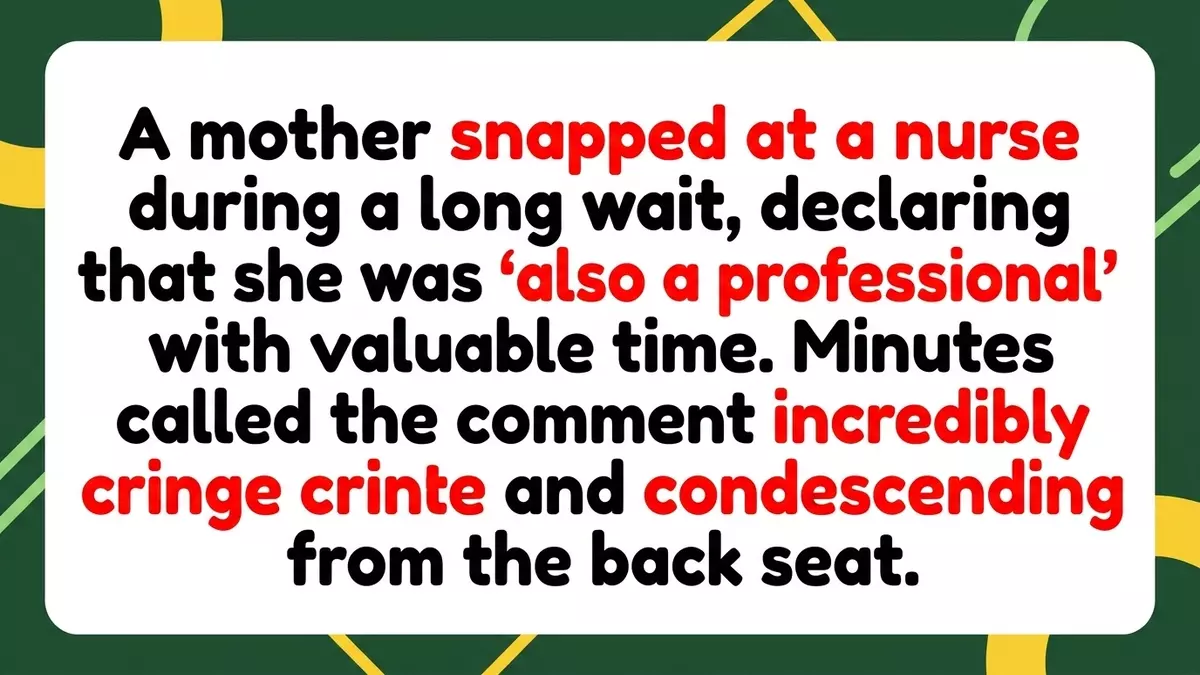
Ultimately, the mother's frustration was completely justified, but her execution crossed the line from self-advocacy into flat-out snobbery. A nurse has zero control over a physician's diagnostic speed or clinic backlog. Pulling rank and flashing a corporate badge in an exam room doesn't make a doctor move faster; it only alienates the frontline staff who are doing their best to keep the system afloat. Your time is incredibly valuable, but the best way to prove you are a true professional is by treating other working professionals with basic human decency—even when the clock is ticking.
Frequently Asked Questions
1. Why do doctors consistently run behind schedule?
Doctors run behind because medical issues are inherently unpredictable. A patient scheduled for a simple ten-minute checkup might bring up a severe, life-threatening symptom that requires immediate, extended evaluation, forcing the doctor to push back all subsequent appointments on the roll sheet.
2. Is it acceptable to ask a medical office to reimburse you for lost time?
While it is incredibly frustrating, medical clinics are not legally or contractually bound to pay patients for wait times. Unlike corporate service contracts, medical care operates under public health and safety frameworks where patient triage and thoroughness take priority over billing punctuality.
3. How can I avoid long wait times at the doctor's office?
The most effective strategy is to book the very first appointment of the day (usually 8:00 AM) or the first slot immediately following the clinic's lunch break. These slots have the lowest probability of carrying over delays from previous patients.
4. What should I do if a nurse is rude to me about a delay?
If a staff member becomes hostile when you politely ask about a delay, do not engage or argue. Note the individual's name, remain calm, and file a formal, written complaint with the clinic's practice manager or patient advocate liaison after your visit.
5. How should parents model boundary-setting for their children in public?
Parents should demonstrate how to state a firm boundary firmly and politely without using demeaning language. Instead of saying "My job is too important for this," model constructive communication by saying: "Our time is valuable, so let's ask the staff for an update politely, and if it's going to be much longer, we will reschedule for a better day."