
Chapter 7
I set the folder on the railing beside him.
“Mercer Built is the prime subcontractor on barracks that are making Marines sick,” I said. “Marines who are nineteen and twenty years old. One of them was hospitalized.”
He didn’t look at the folder. “You don’t know anything about construction.”
“I know mold when I see it. I know burned outlets. And I know a contract extension worth fourteen million dollars is going to be signed by a colonel three days before he loses the authority to sign it.”
He finally looked up. For a moment, something like fear crossed his face. Then it hardened into the old familiar anger.
“You want to know why I didn’t tell you?” he said. “Because I knew you’d do exactly this. Show up, look down your nose, and decide I’m the bad guy. You’ve been doing it since we were kids.”
“Glenn—”
“No. You don’t get to Glenn me.” He stood, nearly knocking the beer over. “You left. You went off and got your scholarship and your commission and your medals, and I stayed. I stayed when Dad lost the plant job. I stayed when Mom got sick. Where were you, Diane? Where were you when she died?”
I’d known for twenty-two years that this was the wound underneath everything. I’d just never heard him say it out loud.
“I was in Fallujah,” I said quietly. “I tried to get home. The flights—”
“I know where you were. Everybody knew where you were. Dad framed the newspaper clipping.” His voice broke on the last word. “He framed it. And I was the one holding Mom’s hand.”
Neither of us spoke for a long time. Crickets started up in the grass beyond the porch.
“That doesn’t explain the barracks,” I said finally.
He laughed bitterly. “The business was dying. You know that? No, of course you don’t. I was three months from losing everything. The house. The trucks. My guys’ jobs. Kemper’s office put the contract out, and someone told me if I bid low and played ball, I’d get it.”
“Played ball how?”
He didn’t answer.
“Glenn. Played ball how?”
“I put Dad’s house up as collateral on the bonding loan,” he said. “Okay? Is that what you want? If Phase Two doesn’t get signed, the bank takes Dad’s house.”
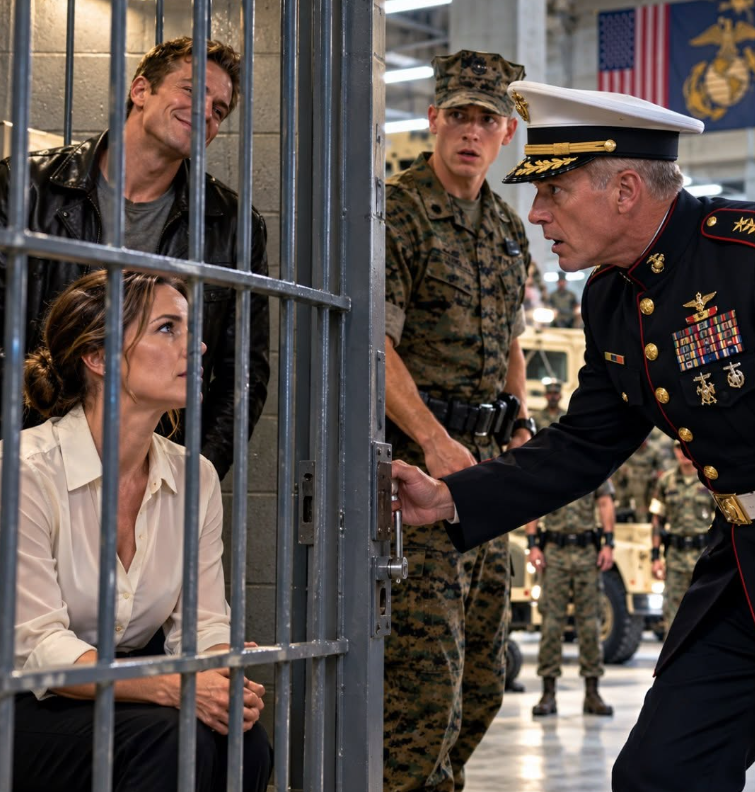
The words hit me harder than the cell door had.
Our father was seventy-eight years old. He had a bad heart and a recliner that faced the window where Mom used to keep her tomato plants. That house was the only thing he had left of her.