
Chapter 2
“Sit,” the General said, pulling out a chair.
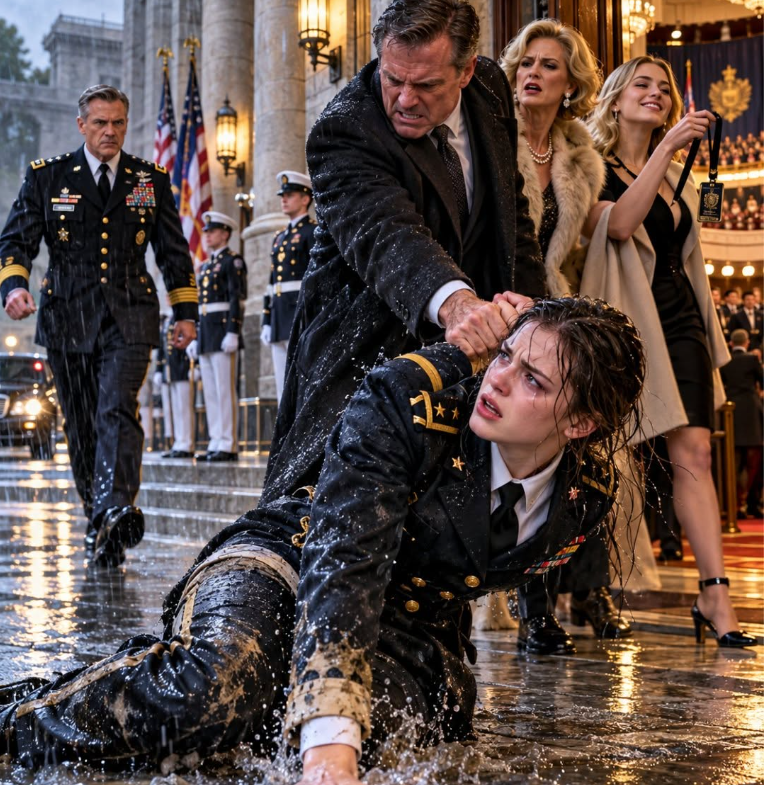
I sat. My legs were shaking now that the adrenaline was draining away. Water pooled at my feet on the hardwood floor. I tucked my injured hand against my stomach and tried very hard not to cry in front of a two-star general.
He didn’t sit. He stood by the window, watching the rain, his hands clasped behind his back. When he finally spoke, his voice was different. Quieter. Older, somehow.
“Your mother’s name was Elena,” he said.
My head snapped up.
Nobody said my mother’s name. Not in my house. Not for eleven years. After she died, my father packed her photographs into boxes and put them in the attic. When Diane moved in, the boxes disappeared entirely. If I asked about her, my father’s face would go flat and cold, and he would change the subject. Eventually, I stopped asking. Eventually, I started to wonder if I had made her up.
“How do you know that?” I whispered.
General Bradley turned from the window. “Because she saved my life.”
The room went very still.
“It was a long time ago,” he continued. “I was a captain. A convoy I was leading got hit, and my vehicle went off the road into a ditch. I was pinned, bleeding, and I was pretty sure that was where my story was going to end.” He paused. “Then a medical officer named Captain Elena Hensley crawled through the mud, under fire, against direct advice, and stayed with me for forty minutes until the evacuation team could reach us. She kept talking the entire time. Kept me awake. Told me all about her daughter back home who was learning to ride a bike and refused to use training wheels because she said training wheels were for people who planned to fall.”
My throat closed up completely.
I remembered that bike. It was purple. I remembered refusing the training wheels. I remembered crashing into the neighbor’s hedge and getting right back up. I did not remember telling my mother why, but it sounded exactly like something I would have said.
“I kept in touch with her after that,” Bradley said. “Christmas cards. A phone call every now and then. When she got sick, she called me.” He reached into the inner pocket of his uniform jacket and pulled out an envelope. It was old, the paper slightly yellowed, sealed with a strip of tape that had gone brittle with age. On the front, in faded blue ink and a looping, elegant handwriting I somehow recognized in my bones, were four words.