
Chapter 10
PART 10
The second letter was shorter than the first.
Walter’s handwriting was shakier, written near the end, when his hands had begun to fail him.
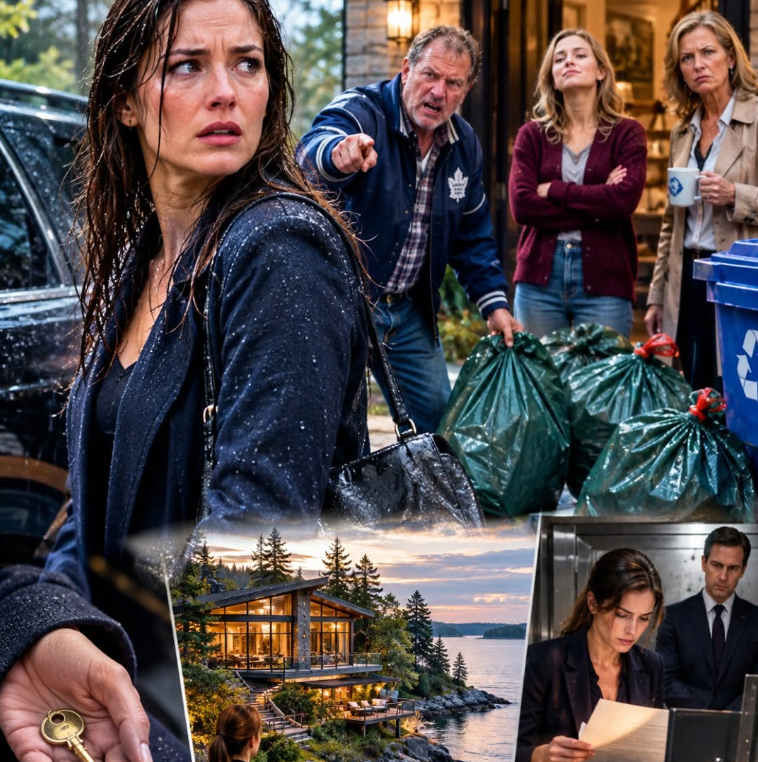
I read it alone, in the secure room beneath the trust office, the brass key resting on the table beside me.
My dear Vivien,
If you are reading this, then the storm I warned you about has come and gone. And you are still standing.
More than that, you had the power to destroy the people who hurt you. And you chose not to.
I want you to understand why that matters.
I gave you Northgate not because you were the smartest person in our family, though you are. Not because you worked the hardest, though you did.
I gave it to you because I watched you on that loading dock at sixteen, giving half your lunch to a driver who couldn’t afford his own. I watched you correct an invoice that was wrong in our favor, not theirs. I knew then that money would never change who you are.
Your mother lost her way. Your father never found his. I could not save them. Perhaps you can’t either. That is not your burden.
But remember this, my girl: self-respect is not the same as pride. Pride slams doors. Self-respect simply refuses to stand in the rain any longer, and then decides, freely, whether to leave a light on.
The key was never the treasure. You were.
With all my love,
Grandpa Walter
I folded the letter and held it against my chest.
And for the first time since that night in the driveway, I cried without it hurting.
In March, I sold the house in Toronto.
I didn’t want to live inside those walls again. Too many green garbage bags in my memory.
With the proceeds, and with Northgate’s backing, I started something Walter would have liked. A program called The Loading Dock. Paid apprenticeships in logistics and finance for young people with no connections, no safety net, and no one who believed in them yet.
Marcus cried a little when I told him the name. He claimed it was allergies.
I took over as chair of Northgate’s board in April.
Twelve years at a consultancy had taught me how to read companies.
Walter had taught me how to lead one.
Bridget applied to The Loading Dock under her own name. I made sure I wasn’t on the hiring committee.
She got in anyway.
They started her on the warehouse floor in Mississauga, the same dock where Walter had once put me. She called me after her first week, exhausted and oddly proud.
“I learned how to read a bill of lading today,” she said. “Do you know how complicated those are?”
“I know,” I laughed. “Grandpa made me do a hundred of them.”
She showed up at the cottage in May with a paper shopping bag.
Inside was my burgundy cardigan. Washed. Folded. A small hole in the elbow neatly mended.
“I don’t need to be you anymore,” she said. “I’m trying to figure out who I am instead.”
I hugged her so hard she squeaked.
Dad’s first letter arrived in June.
Handwritten. Two pages. Mailed from the house where he was serving his sentence.
Most of it was awkward and stiff. My father had never been good with words.
But the last line, he had pressed so hard into the paper that it was nearly carved there.
I let go of the bike seat, Viv. I’m sorry. I’m so sorry.
I read it many times.
I didn’t call him.
Not yet.
But I wrote back.
One page.
It was a start.
Mom moved in with Aunt Ruth in Barrie for a few months. She found a counselor. She started going to church again. She called every Sunday, and she never asked for anything.
In July, she drove up to Georgian Bay for the first time.
She stood awkwardly in the doorway, holding something wrapped in tissue paper.
My blue coffee mug.
The chip was still there.
“I couldn’t throw it away,” she said. “Every morning, I’d look at it and remember the look on your face that night.”
She held it out to me with both hands.
“I’m not asking you to forgive me, Vivien. I’m just asking if I can bring you coffee sometimes.”
I took the mug.
“You can start today, Mom.”
That evening, Sam built a fire on the shore. Bridget and Aunt Ruth argued cheerfully over the right way to roast marshmallows. Mom sat quietly beside me in an Adirondack chair, wrapped in a blanket, watching the sun sink into the bay.
Sam handed me a cup of tea and sat down on my other side.
He had asked me to dinner in April. Then again in May. By June, we had stopped counting.
“You okay?” he asked quietly.
I looked around the fire.
At my sister, finally learning who she was.
At my mother, slowly learning how to be one again.
At the man beside me, who had fixed my generator in a storm and never once asked me for anything except my company.
“Yeah,” I said. “I really am.”
Later that night, after everyone had gone to bed, I walked to the front door of the cottage.
Beside it, I had hung a single small hook.
I took the brass key out of my pocket and hung it there.
It caught the moonlight and glowed softly against the cedar wall.
For years, I believed family meant paying whatever it cost to keep everyone together.
I was wrong.
Family isn’t the people who share your last name.
It’s the people who don’t make you stand in the rain to prove you belong.
Sometimes, loving them means handing them the consequences they’ve spent their lives avoiding.
Sometimes, it means refusing to be their bank, their scapegoat, or their silent witness.
And sometimes, when the storm finally passes, it means leaving the porch light on.
Just in case they find their way home.
My grandfather was right.
The key was never the treasure.
I was.