
Chapter 22
“That’s a terrible first impression,” I told him.
“It was the best one I’ve ever had,” he said.
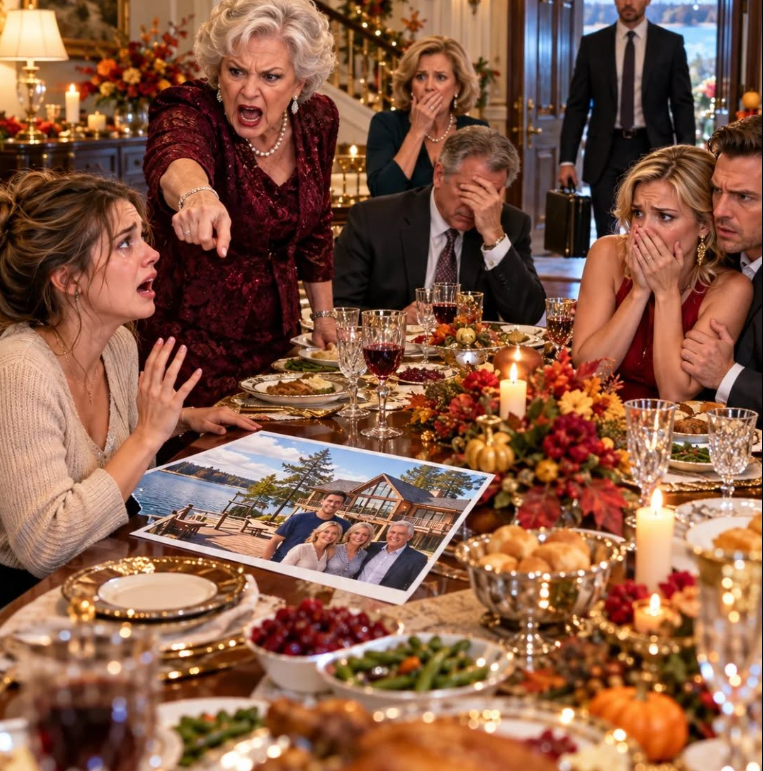
One year to the day after that Thanksgiving, we gathered at the lakehouse.
Not around a perfect table. Around a crowded, noisy, imperfect one. Grandma at the head, in pearls and an apron covered in flour. Ben and Lily, Lily laughing too loud at Ben’s terrible jokes. Walter and June, who brought two pumpkin pies and a casserole nobody could identify. Harold and his wife. Naomi, who arrived late with a bottle of wine and a pair of muddy sneakers. Aunt Ruth and her teenagers, who’d heard the whole story and wanted to see the house for themselves. And Marcus, carving the turkey badly while everyone heckled him.
After dinner, Grandma led me into the living room, to the old upright piano she’d had shipped from her home in Lisbon. She’d been taking lessons all spring, at eighty-two years old, just to learn one song.
She opened Daniel’s leather journal to a page marked with a yellow ribbon. At the top, in faded ink, my father had written: Zara’s Song.
Her fingers were clumsy. She missed notes. She had to start over twice.
But by the third time through, everyone in the room had gone quiet, and I was crying, and so was Ben, and so was Lily, and so was Marcus, standing in the kitchen doorway with a dish towel over his shoulder.
When she finished, Grandma turned on the bench and looked at me with eyes full of light.
“He’d be so proud of you,” she said.
I looked around the room. At the people who had stayed. At the ones who had come back. At the family I’d built out of the wreckage of the one I’d lost.
For most of my life, people told me who I was. Unstable. Overwhelmed. A burden. A girl who couldn’t handle real life.
They were wrong.
Family isn’t the people who share your last name. It’s the people who see you when you’re invisible, who tell you the truth when lies would be easier, who open the door when you knock in the cold. Self-respect isn’t something anybody can sign away in a courtroom. And love, real love, doesn’t wait until people deserve it.
If it did, none of us would ever get any.
Outside, the first snow of the season began to fall softly over the lake. Inside, my grandmother started the song one more time, and this time, she didn’t miss a single note.