
Chapter 2
I ended the call.
For a moment, I stood alone in the oppressive heat of the deserted parking lot, my thoughts spinning.
Why had Julian gone to my mother’s house at two-thirty in the morning?
He obviously believed he’d constructed a flawless alibi. He thought that by claiming self-defense against a frightened elderly woman, he could escape responsibility. He believed he could fool the police.
But as I pulled open my car door, something suddenly occurred to me.
There was one fatal weakness in his carefully crafted lie.
He claimed my mother had attacked him with the heavy iron fireplace tool?
My hands tightened around the steering wheel until my knuckles went white. I pressed the accelerator and drove into the dark night.
I didn’t scream.
I didn’t cry.
I was heading straight to the police station with one impossible fact—a single, devastating truth that was about to ruin everything Julian had built his life upon...
PART 2
The Fairfax County police substation glowed like an aquarium in the dark, all fluorescent light and glass. I parked crooked across two spaces and didn’t care.
The first person I saw when I walked in was my husband.
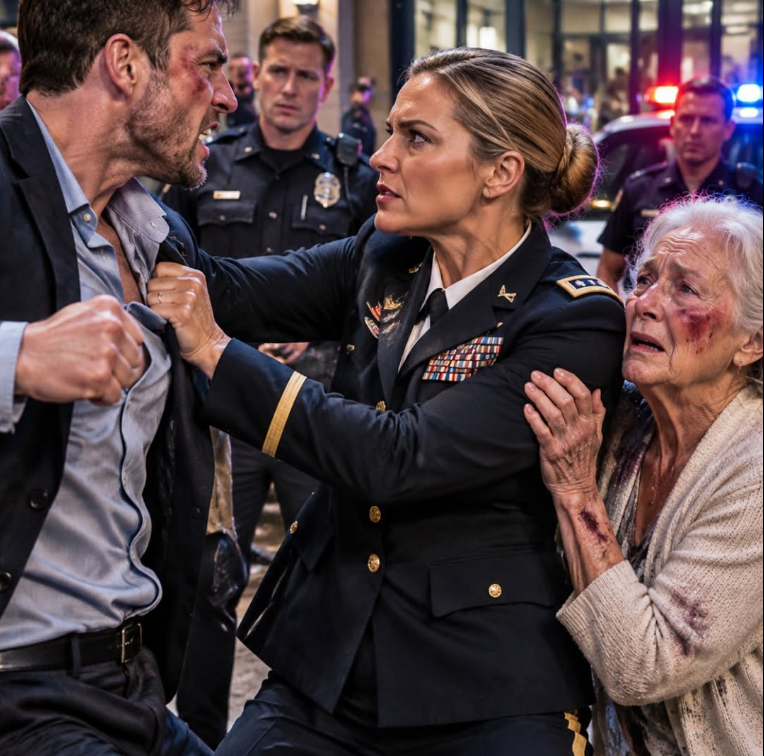
Julian sat on a molded plastic bench in the lobby, pressing an ice pack to his left temple. His dress shirt was untucked, one sleeve rolled, a thin line of dried blood running from his hairline toward his ear. He looked exactly like what he wanted everyone to see: a decent, rattled man who had survived something terrible.
When he spotted me, his face crumpled with relief. He stood and opened his arms.
“Val. Thank God. Baby, I’m so sorry you had to find out like this.”
I didn’t step into the hug. I stopped three feet away, the way I’d stop in front of a soldier I suspected was lying to me.
“Find out what, Julian?”
He lowered his voice, as if sparing me. “Your mom isn’t well. I’ve been trying to protect you from how bad it’s gotten. She called me tonight, confused, saying someone was in the house. I drove over to check on her, and she came at me. She didn’t even know who I was.”
It was a good performance. A sympathetic desk officer was watching us with the soft expression people reserve for families in crisis.
“She called you,” I repeated.
“Around one-thirty. I didn’t want to wake you at the base.”