
Chapter 22
"You don't have to open it," she said. "But I don't want you to not open it because of me. Whatever you decide, I'm okay."
I opened it.
It was one page, handwritten in my mother's neat, looping cursive. It said that she had completed eleven months of counseling. That her therapist had helped her understand some things about her own childhood, and her own mother, that she had never let herself look at before. That she didn't expect forgiveness. That she wasn't asking to see Noah.
And near the bottom, there was one sentence I read over and over:
I have spent my whole life needing people to see me as good, and I think somewhere along the way, I forgot to actually be good.
I folded the letter and put it back in its envelope.
"What are you going to do?" Clara asked.
"Nothing right now," I said. "Maybe someday I'll write back. Maybe I won't. But it doesn't change anything. The order stays. Noah stays safe. You stay safe." I set the envelope in the drawer by the phone. "If she's really changing, she'll understand that. And if she's not, then it's exactly what she should expect."
Clara nodded. She didn't push. She just leaned against my shoulder.
Out in the backyard, Noah—eighteen months old now, sturdy and loud and fearless—was chasing a soap bubble across the grass, squealing with delight every time one popped against his face. Gloria, who had somehow become his unofficial godmother, was blowing them for him from a lawn chair.
"Look at him," Clara said softly.
I looked.
My son tripped over his own feet, sat down hard on the grass, looked stunned for one second, and then started laughing so hard he fell over sideways.
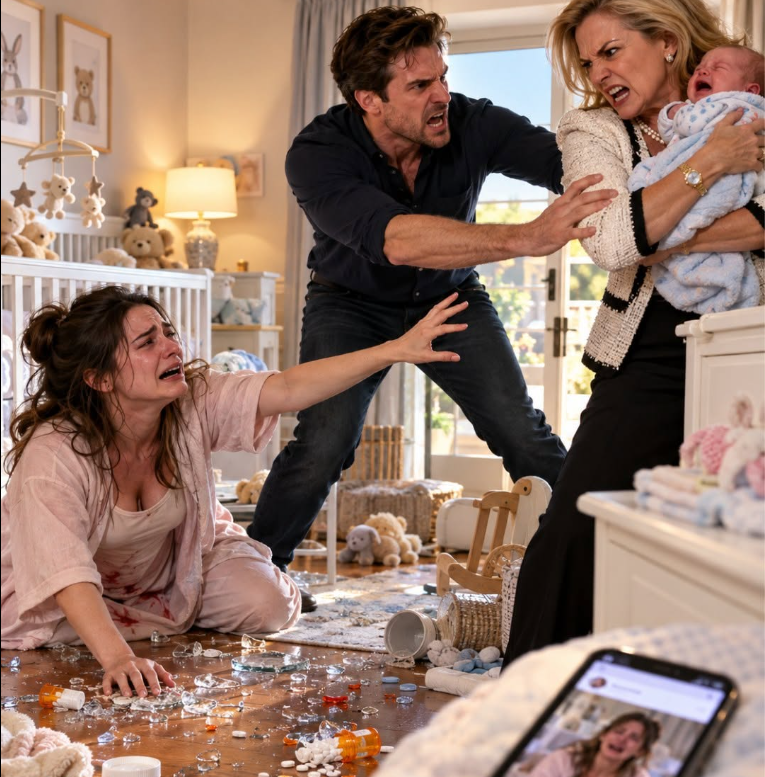
He would grow up never knowing that morning in the nursery. He would never remember the glass on the floor, or the woman who held him out of his mother's reach, or the eight minutes between a lie and the truth.
What he would know instead was this: a house where people believed each other. A mother who had been brave enough to keep speaking until someone listened. A father who had learned, almost too late, that love isn't loyalty to whoever raised you. It's showing up for the person who needs you, the moment she tells you she does.
And an aunt in Oregon, and a cousin named Lily, who would teach him how to make mud pies, and how to tell when someone is being mean but pretending to be nice.