
Chapter 3
“Where is the second page?” I asked.
“I don’t know what you’re talking about,” my mother said.
“Mom.”
“Mauricio, it’s Christmas. Can we please not do this in front of the children?”
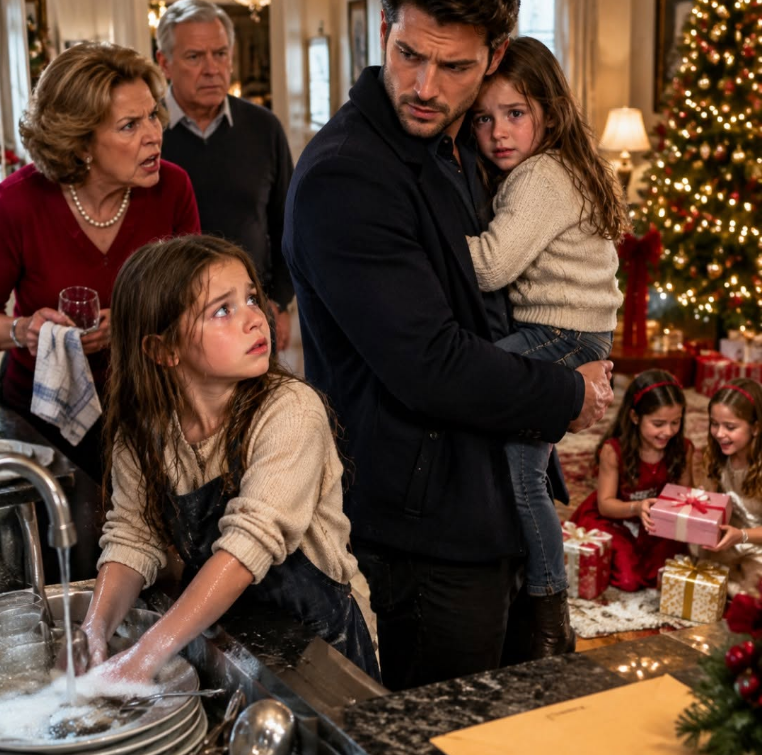
That almost made me laugh. She hadn’t cared about the children when one of them was standing at a sink.
Then I smelled it. Faint, under the cinnamon candles and roasted ham. Burned paper.
I walked into the living room, past the tree and the mountain of torn wrapping paper, and knelt in front of the fireplace. The fire had burned low. Among the gray ashes, wedged against the grate where the heat hadn’t quite reached, was a curled black scrap of paper with one corner still white.
I pulled it out with the fireplace tongs.
Most of it crumbled. But three fragments of typed words survived.
…Lucía Navarro…
…evidence that the charges were…
…fraudulent…
I didn’t know the name Lucía Navarro. But I knew my daughter’s original birth certificate listed her mother as L. Navarro, and I knew the word “fraudulent” didn’t belong anywhere near my child’s adoption.
When I stood up, the room had gone completely silent. Even Sofia and Emma had stopped rustling their presents.
“Everyone needs to leave,” I said.
“Mauricio—” my father began.
“This is my house. You came here as my guests. You put my daughter to work like a servant, you told her she isn’t family, and you burned a legal document addressed to me.” My voice was low and very calm. People who knew me in business knew that the calmer I got, the more trouble they were in. “Get your coats.”
Paola stepped forward. “Mauri, please. Mom made a mistake with the dishes, okay? She’s old-fashioned. But you can’t throw us out on Christmas.”
“Did you know?”
“Know what?”
“That she was making Renata work in the kitchen while your girls opened presents.”
Paola’s eyes flicked toward the kitchen, then away. She didn’t answer.
That was answer enough.
It took twenty minutes for them to gather their things. My mother left without looking at me. My father paused at the door as if he wanted to say something, then thought better of it. Paola cried quietly while she buttoned Emma’s coat.
Bradley was the last one out.
He stopped beside me in the foyer and spoke so softly no one else could hear.
“The letter,” he said. “What else did it say?”