
Chapter 4
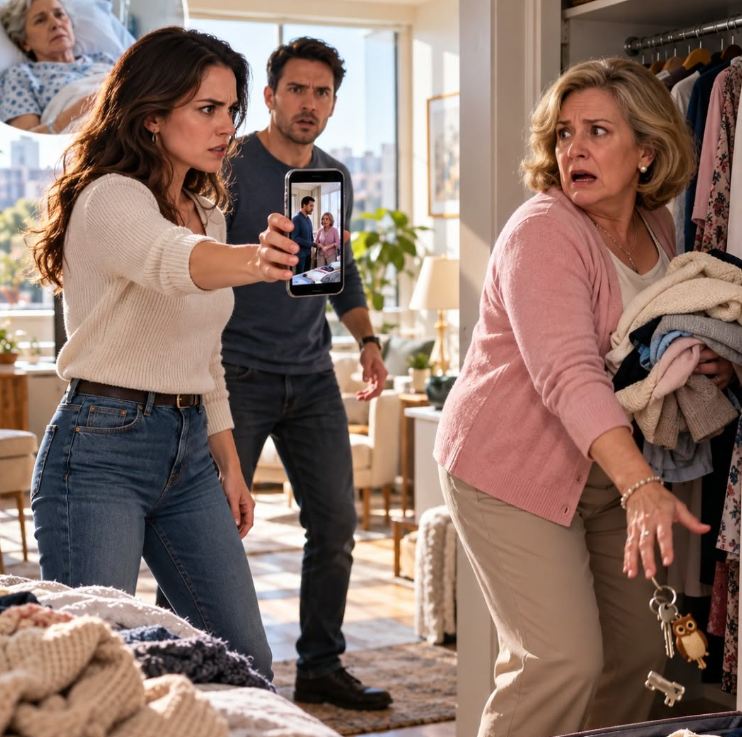
Ophelia put the folder back. Then she pulled out the second drawer and started taking my mother's sweaters out of it.
"I'll need this space," she said.
I sat in that closet for twenty minutes.
I didn't cry. I want to be honest about that, because people who read stories like this always imagine the wife sobbing on the floor. I didn't. Something inside me went very cold and very quiet, the way a lake freezes over: from the edges first, then all the way to the center.
I watched the Sunday clips. Ophelia arranging her pill bottles on my mother's nightstand. Ophelia taking down the photo of my parents' wedding from the bookshelf and putting it face down in a drawer. Ophelia sitting in my mother's reading chair by the window, drinking coffee out of my mother's favorite mug, the yellow one with the chipped handle, talking on the phone to someone named Rosario.
"No, it's beautiful. Three bedrooms. Right by the park. I always said I deserved a place like this. After everything I sacrificed for that boy? It's the least the universe owes me."
The universe. As if my mother had worked thirty-one years as a school secretary, scrimped and saved and renovated her home with her own two tired hands, all so the universe could hand it over to Ophelia.
I saved every clip. I downloaded each one to my phone, then emailed copies to myself, then uploaded them to a cloud folder. I'm an accountant. I believe in backups.
Then I went back to my desk and finished reconciling that invoice. It balanced on the first try.
At six-thirty that evening, I parked across the street from my mother's building.
The lights were on in her apartment. Every single one. My mother never left more than one lamp on at a time; she grew up poor and she still unplugs the toaster when she's not using it. Seeing all those windows blazing made my stomach tighten.
Don Esteban, the building superintendent, was sweeping the front steps. He's been there longer than my mother has, a small, white-haired man with a limp from an old soccer injury and a habit of humming boleros.
"Señora Mariana," he said, leaning on his broom. "How is your mother? I heard about the ambulance."
"She's better, thank you. She's having surgery on Thursday."
He nodded slowly. Then he glanced up at the lit windows and back at me.