
Chapter 18
PART 9
Three months later, the trial of The People v. Vivian Hale began on a cold Monday morning.
The prosecutors had combined the charges: the aggravated assault on me, the attempted fraud at the bank, and, after the journal and Daniel’s statement, the second-degree murder of Sarah Hale. Daniel’s own case would be tried separately. In exchange for his testimony, Ruth had offered him a reduced sentence on the conspiracy charges related to Sarah. But not on the fraud. On that, she refused to budge.
“Eleven million dollars,” Ruth said. “Teachers. Nurses. A church. He doesn’t get a discount on that.”
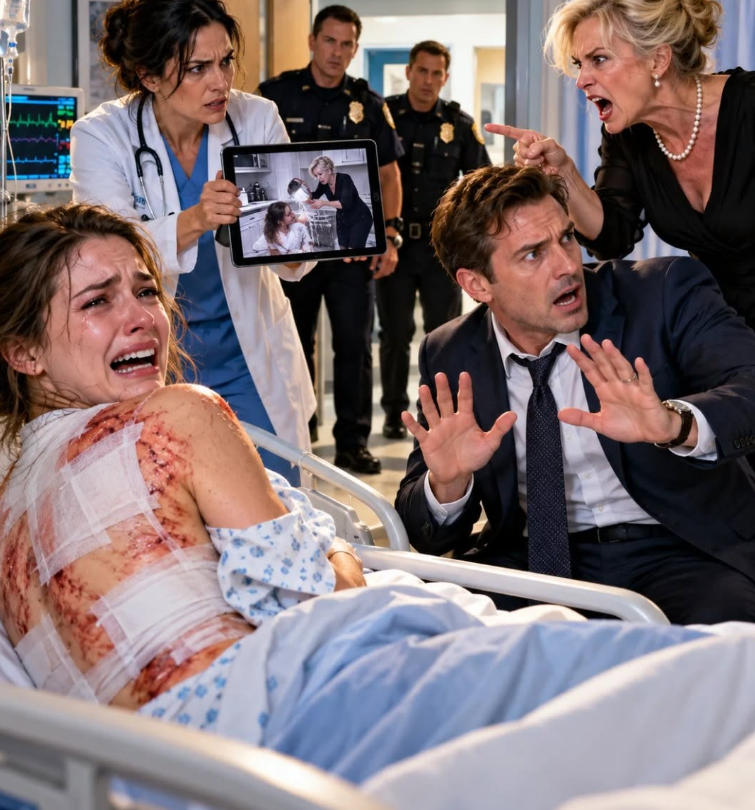
By then, my burns had healed into scars. Silvery, raised, mapping my back and shoulders like a coastline. I’d stopped wearing the pressure garments during the day. Some mornings, I still couldn’t look in the mirror. Other mornings, I made myself look for a long time.
Megan came to every day of the trial. So did Lena, whenever she wasn’t working a shift. Ellen Brooks sat in the front row in a navy cardigan, holding a photograph of Sarah in her lap. And Detective Reyes sat near the back, close enough that I always knew where he was.
Daniel’s warning had haunted me for weeks. Something you don’t know about my mother. Ruth and Reyes had dug through every record they could find. Birth certificates. Property records. Old police reports. They found nothing.
Until the second week of trial.
Vivian’s defense attorney, a sharp, silver-haired woman named Patricia Lowe, who had replaced the overwhelmed young public defender, stood up and called her first witness.
“The defense calls Dr. Raymond Seward.”
He was a psychiatrist. And for two hours, he testified that Vivian Hale had suffered from a severe, untreated personality disorder for most of her adult life. He described childhood abuse, a violent first marriage, and decades of paranoia. He said she believed, sincerely and completely, that the women her son married were threats to her survival.
“In my professional opinion,” Seward concluded, “Mrs. Hale was not capable of appreciating the wrongfulness of her actions.”
Patricia Lowe turned to the jury. “Ladies and gentlemen, this is not a monster. This is a broken woman. A woman failed by every system that should have helped her.”
I felt the room shift. Jurors exchanged glances. One older woman in the second row dabbed her eyes.
That was the surprise Daniel had warned me about. Not a secret crime. A secret sympathy. The defense wasn’t going to argue that Vivian didn’t do it. They were going to argue that she couldn’t help it.