
Chapter 2
Trust is not always taken in one dramatic moment. Sometimes it is borrowed piece by piece until one day you finally notice the account has been drained.
Their attorney smiled far too often.
My attorney barely spoke.
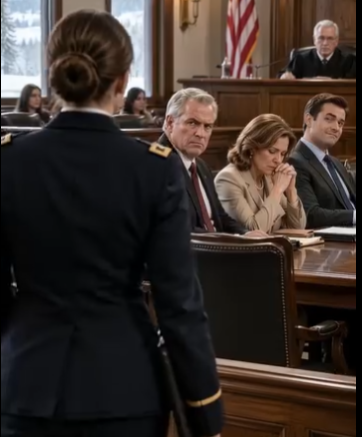
At 9:12 a.m., the clerk called the case, and my parents’ lawyer began reading from the emergency petition as though I were not sitting ten feet away in a dark blue dress uniform, my hands calmly folded across my lap.
Fragile. Unpredictable. Reckless with money. Incapable of making reasonable decisions. Easily influenced. Emotionally unstable after military service.
He delivered each phrase in a smooth, practiced tone, but every one of them felt like someone placing a plate full of lies in front of me and expecting me to swallow them.
I did not interrupt.
I did not cry.
I did not answer every accusation.
The Army had taught me that sometimes the quietest person in the room is the one standing on the strongest ground.
My attorney had already submitted our response to the county clerk: bank records, my mortgage payment history, the title to my vehicle, my active-duty record, a letter from my commanding officer, hospital visitor logs, and the trust notice my grandmother had signed before her death. Every page had been copied, stamped, indexed, and arranged inside a folder with yellow tabs because feelings can be dismissed, but paperwork forces people to stop and look.
Then my father leaned forward.
His face had gone red. His hand struck the table once, hard enough to make their attorney’s pen jump.
“Take everything she owns,” he snapped.
The entire courtroom seemed to tense.
The clerk stopped typing. Michael’s smile faltered. My mother looked up from the floor for the first time that morning.
Even the judge became completely still.
He looked at my father, then at me, and finally at the file my attorney silently placed on the bench. It was not dramatically thick. It looked ordinary. Just a plain cream-colored folder with a courthouse stamp and a black binder clip gripping one corner.
Somehow, that made it feel even worse.
The judge opened the file and began reading.
One page.
Then another.
At first, his expression remained carefully neutral. Judges are trained to conceal surprise. But by the fourth page, something in the room changed. There was no loud gasp, no sudden outburst. It felt more like everyone had heard the same distant noise and was waiting to find out whether it was thunder or a door being forced open.