
Chapter 16
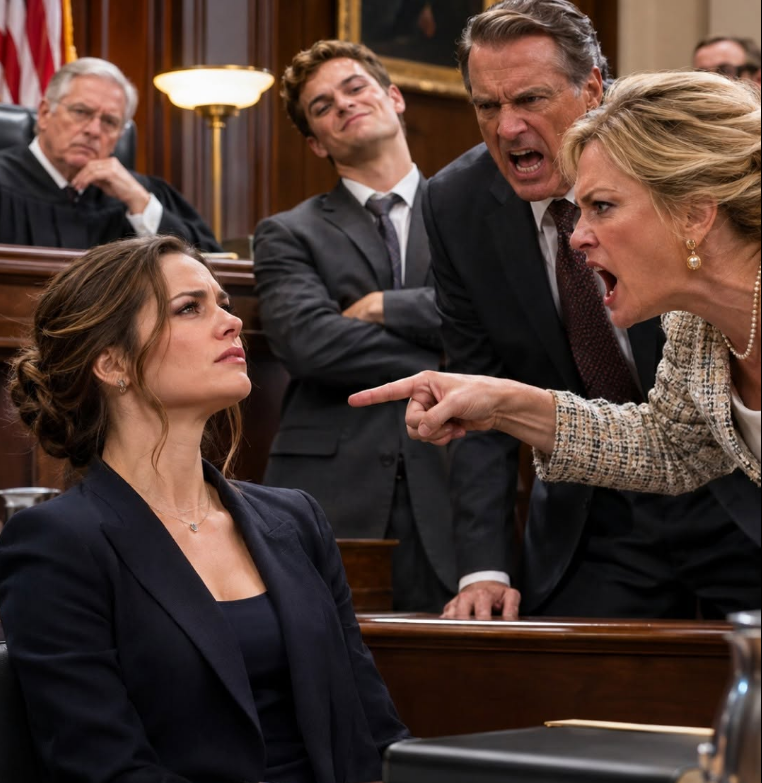
Mom was on her feet again before anyone could stop her.
“He’s confused! He’s been manipulated! She did this!” She pointed at me, her finger shaking. “She poisoned Evelyn and now she’s poisoned my son!”
“Mrs. Reed,” the judge said, “one more outburst and you’ll be removed.”
But something had broken loose in my mother, something that had been held together for decades by pearls and luncheons and appearances.
“Do you know what it’s like?” she cried, and it wasn’t aimed at the judge anymore. It was aimed at the empty air where Grandma used to be. “Thirty-nine years I gave to that family! Thirty-nine years of her looking at me like I wasn’t good enough for her son! Every Christmas, every birthday, she’d give Charlotte some little book and give me nothing but that look. She had millions. Millions! And she let us drown. She let Robert’s business fail. She let Jason’s company fail. I just took what should have been ours!”
The words echoed. Then they settled.
My mother looked around the courtroom and seemed to realize, all at once, what she’d said and where she’d said it.
She sat down very slowly.
Lane quietly closed his briefcase.
Judge Whitaker let the silence hold for a long time. When he spoke, his voice was measured and grave.
“The court has heard sufficient testimony. The petition contesting the will of Evelyn Hale Reed is dismissed with prejudice. The will stands as written. The entirety of the estate passes to Charlotte Reed.”
He removed his glasses.
“Further, this court is referring Exhibit 14, along with the testimony regarding forged loan documents and witness tampering, to the district attorney’s office. Mrs. Reed, I strongly suggest you retain criminal counsel.”
The gavel fell. It sounded smaller than I’d imagined it would.
I didn’t feel triumphant. I felt tired. I felt the way you feel after a long illness breaks, weak and lighter at the same time.
Across the aisle, Mom sat motionless, staring at the table. Two officers stood quietly nearby. She didn’t look at Jason. She didn’t look at Dad. She didn’t look at me.
Jason walked to my table. His public defender hovered beside him.
“They’ll probably charge me,” he said.
“Probably,” I agreed. “But you told the truth. That’s going to matter, Jason. Prosecutors and judges notice who tells the truth first.”
“Will you…” He stopped. Started again. “Will you still talk to me? After?”