
Chapter 22
“I’d love some.”
With the money Daniel repaid me, plus a great deal more of my own, Evelyn and I created the Yellow Kitchen Fund.
It pays for attorneys, investigators, and forensic accountants for seniors in Arizona who’ve been financially exploited by people they trusted. Gus Pemberton sits on the board. So does Dr. Rourke. Frank Delgado consults for free, as long as we keep him supplied in bottled water.
In our first year, we helped forty-one families.
I also set up education trusts for Lily and Owen. Not because they asked. Because Harold and I always said we would, back when we thought we’d have to save for it a little at a time.
I bought Walter Fenwick a new porch swing for his grandson’s house. He sent back a photograph of himself sitting in it, holding a single cut rose from June’s garden.
Still saying hello, he wrote on the back.
On Thanksgiving, exactly one year after the strangest autumn of my life, the house on Willow Creek Lane was full.
Dolores brought tamales and her husband, Ernesto, who turned out to be delightful and not slowly dying at all. Gus brought a pecan pie. Evelyn came with her wife and a bottle of wine she claimed was “medicinal.” Frank peeled the label off his beer.
Lily set the table. Owen argued about which bedroom upstairs would be “his” when he stayed over, and I let him choose, and he picked the one with the window facing the roses.
Renee and I basted the turkey together in the yellow kitchen.
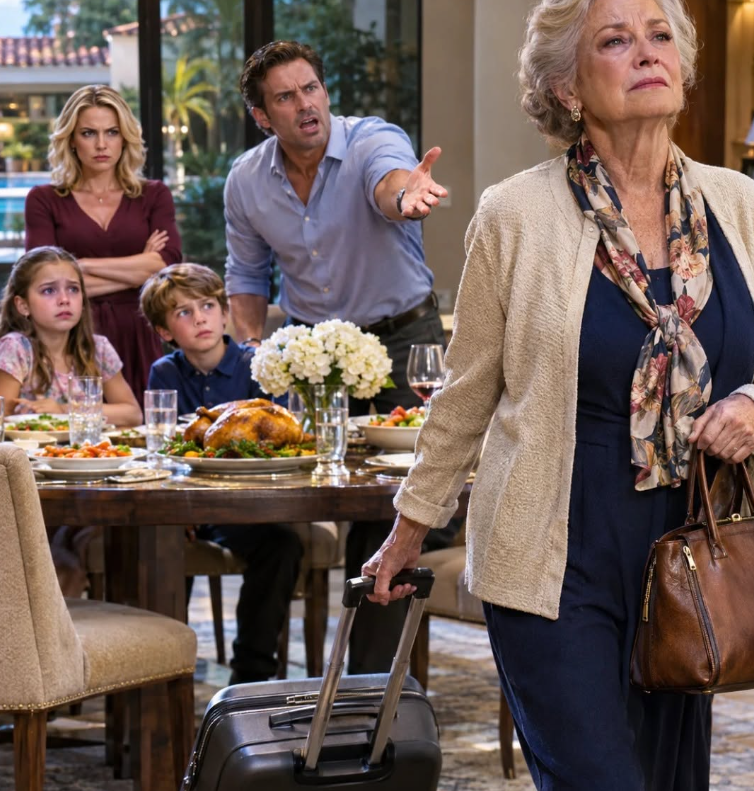
At 6:18 p.m., Daniel stood up from his chair.
The table went quiet. Lily lowered her fork. For one breathless second, I saw the old dinner flash across everyone’s faces—even his.
Daniel cleared his throat.
“Mom,” he said. “I wanted to ask you something.”
I waited.
“Can we come home for dinner next Sunday too?”
The table laughed, a little teary, a little relieved. I looked at my son—truly looked at him—and saw the nine-year-old on the porch who had once chosen to tell the truth.
“You can come home for dinner,” I said, “every Sunday. As long as you help with the dishes.”
“Deal,” he said, and sat down. Renee reached over and squeezed his hand.
Later, after everyone left, I sat alone on the porch with a cup of tea.
Harold’s letter lives in a frame now, beside the sign he carved. THE YELLOW KITCHEN.