
Chapter 2
An attorney.
I want to tell you that I felt nothing. That I stood there like a stone wall and let it all roll off me.
But that wouldn't be true.
What I felt was the floor of my life tilting very slightly, the way a boat tilts when someone heavy steps aboard. Not enough to knock you over. Just enough to remind you the water is right there.
I stepped aside.
"Then come in," I said. "I'll put the kettle on."
They sat in my living room like strangers in a waiting room.
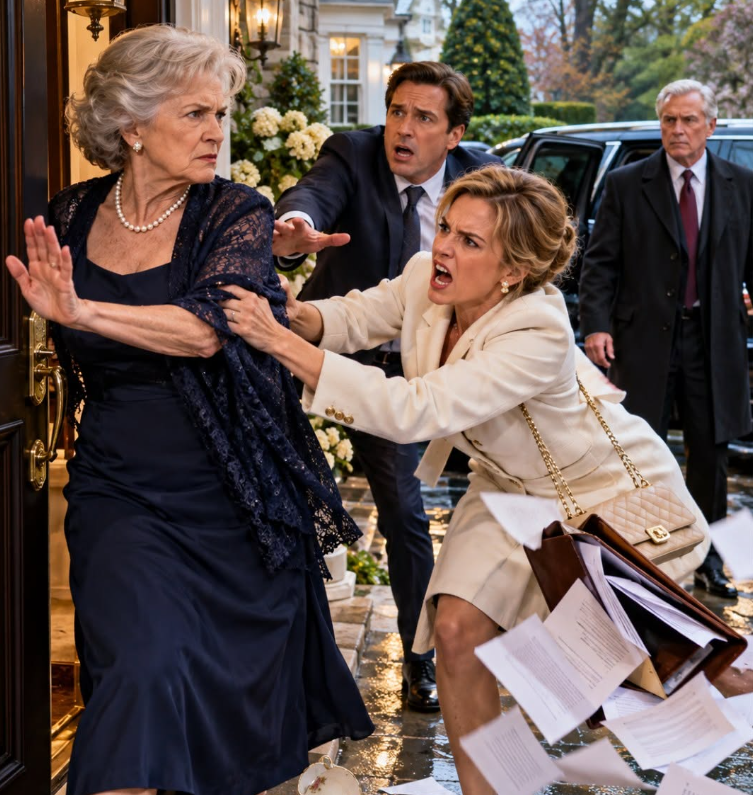
Genevieve took Thomas's armchair. I don't think she knew it was his. I don't think she would have cared. Benjamin sat on the very edge of the sofa, his phone still gripped in his hand, the screen dark. Diane Prescott took the straight-backed chair by the window and set her portfolio across her knees.
I brought out the good teapot. The one with the painted violets. I brought out the good cups too, all four of them, and set them on the tray with the sugar bowl that had belonged to my grandmother.
Genevieve noticed. I watched her notice.
I had always served her in the everyday cups. Not to insult her. Because I had been raised to save the nice things for occasions, and somehow, in all those years, a visit from my son and his wife had never felt like one.
This morning felt like an occasion.
I poured. Nobody spoke. The rain kept tapping at the windows like it wanted in on the conversation.
Finally, I sat down in my own chair, folded my hands in my lap, and looked at the attorney.
"Go ahead, Ms. Prescott."
She opened the portfolio.
"Mrs. Kelley, I'll be direct with you, because I believe you'd prefer that. Late last night, your son and his wife contacted me with some concerns. They told me that yesterday evening, without warning or explanation, you canceled a large number of financial arrangements you'd maintained for many years. Arrangements that their household depends on."
"One hundred seventy-four," I said.
She paused. "Excuse me?"
"One hundred seventy-four arrangements. If you're going to discuss them, you may as well have the correct number."
Something flickered across her face. It was there and gone so quickly I almost missed it.
She looked down at her notes.
"They also expressed concern," she went on, more carefully now, "that this decision was sudden, emotional, and out of character. They mentioned that you're seventy-seven. That you've lived alone since your husband passed. That you've seemed more isolated lately."