
Chapter 14
Diane talked for two hours.
She’d married Richard at twenty-two. He’d been handsome and funny and impossibly confident. By their tenth anniversary, she understood that the confidence was a costume and that almost everything underneath it was borrowed or invented.
“He lost money,” she said. “Lots of it. And then he discovered that lonely people with money will hand it to a charming man who listens.”
Widows, mostly. Widowers sometimes. Richard would befriend them through church groups, charity boards, country clubs. He’d find a younger relative who was struggling, a nephew in debt, a daughter in a bad marriage, and offer them a partnership.
“Margaret Ellison,” Diane said, and her voice trembled for the first time. “Palm Beach. Seventy-eight. Sharp as a tack. Her nephew owed Richard money. Richard helped him file an emergency guardianship petition. Said she was confused, a danger to herself. The judge granted temporary guardianship in a single hearing. Margaret never even got to speak.”
“What happened to her?” I asked.
“She was moved to a facility. Her house was sold. Her accounts were managed.” Diane’s hands twisted in her lap. “She died eleven months later. By then, almost nothing was left. Richard bought a boat.”
The room was very quiet.
“And Vanessa?” Daniel asked hoarsely.
Diane looked at him with something like sorrow. “Vanessa grew up watching her father. She learned that people are doors, Daniel. You find the key and you walk through. I tried to give her something else. I failed.”
She handed Harold the USB drive.
“For twelve years, I’ve copied Richard’s records. His real books. Every account, every name, every transfer. I told myself I was doing it for protection. The truth is I was too frightened to do anything with it. I’m not frightened anymore. I’m just tired.”
Then she told us about Monday.
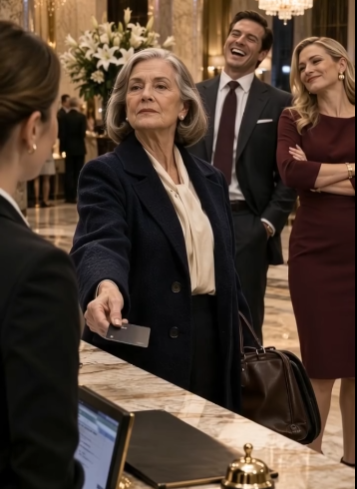
Ten days earlier, Vanessa had filed an emergency petition for temporary conservatorship of Eleanor Whitmore in the probate court in Hartford, Connecticut. The petition described a woman suffering “rapid cognitive decline, financial delusions, and episodes of public confusion.” It promised supporting evidence, including “documented behavior at a Manhattan hotel,” which would be filed Sunday night.
The lobby photos.
The petitioner’s name was Daniel Whitmore.
Daniel stared at the printout Harold pulled from the court’s online docket. His own signature at the bottom.
“I never…” He stopped. His face crumpled. “She gave me papers two weeks ago. She said they were for refinancing the house. Insurance riders. I signed where the sticky notes were. I didn’t read them.”