
Chapter 15
We renovated it over the summer. Daniel spent his weekends there, tearing out old drywall and rebuilding the porch steps with his own hands. He said he wanted to make sure every step was solid. Nobody would ever trip on those steps, he said.
In September, almost exactly a year after the night of the rain, we opened the doors.
We called it Harold’s House.
It was a home for older women who had nowhere else to go. Widows pushed out of homes by family members. Grandmothers whose children had stopped calling. Women who had spent their whole lives taking care of everyone else and had found themselves, at the end, with a suitcase and nowhere to put it.
It had twelve bedrooms, a big shared kitchen, a garden, and a lending library. It had a part-time nurse and a social worker who came twice a week. It had a legal aid clinic one Saturday a month, run by a young attorney Samuel had trained, who helped the residents understand their rights, their property, and the fine print people had tried to trick them into signing.
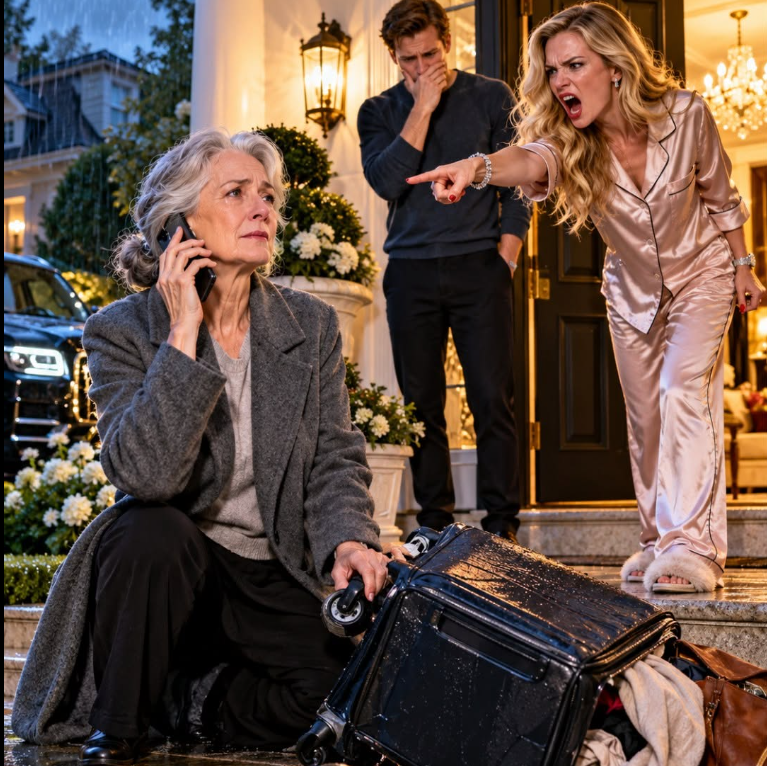
And on the front porch, beside the door, there was a small wooden shelf. On it sat a single broken suitcase wheel, cleaned and polished, with a little brass plaque underneath.
You are not a burden. You are home.
The first resident was a woman named Doris, eighty-one years old, who arrived with two shopping bags and a cat carrier. Her grandson had sold her house while she was in the hospital for a hip surgery. When she walked through the front door and saw her room, with fresh flowers and a quilt Ruth had made, she sat down on the bed and cried for twenty minutes.
“Why are you doing this?” she asked me when she could finally talk.
I sat beside her and held her hand.
“Because somebody has to,” I said.
Vanessa’s letter arrived the week before Thanksgiving.
It came in a plain white envelope with a Charlotte postmark. Daniel brought it in with the mail and set it on the table in front of me without a word. Then he went to make coffee, giving me privacy the way his father always used to.
The letter was two pages long, handwritten.
She said she was living with her sister and working at a bank, of all places, as a teller. She said it was humbling to count other people’s money all day when she’d spent so long chasing her own. She said she’d started seeing a counselor, and for the first time she was talking about the trailer outside Macon and the nights with the lights turned off and the way her mother used to say she’d never amount to anything.