
Chapter 19
"And then," Liam went on, "Mama came home. And she sang the song. And I came out."
He turned and looked at her, and he smiled, wide and gap-toothed and completely, unmistakably happy.
"And now I'm big. And I don't live under tables anymore. I live here." He spread his arms wide, nearly knocking the cake over. "With Mama and the oak tree."
For a moment, nobody said anything at all.
Then one of the little girls from his class, a serious child with braids and a tiara, said, "That's a good story."
"I know," Liam said, satisfied.
And he blew out all five candles in one breath.
Everyone cheered. The children swarmed the cake. Rosa wiped her eyes with her apron and started cutting slices that were far too big. Marcus Bell took off his glasses and pretended there was something in his eye. Dr. Raman squeezed Madeline's shoulder as she walked past.
Madeline stayed kneeling by the picnic bench, because her legs weren't quite steady enough to stand.
Liam hopped down beside her, a smear of chocolate frosting already on his chin.
"Mama, are you crying?"
"A little bit."
"Happy crying or sad crying?"
She pulled him into her arms and held him there, in the backyard of their little house, under the crooked oak tree, in the warm golden light of a September afternoon.
"Happy crying, baby," she whispered. "The happiest."
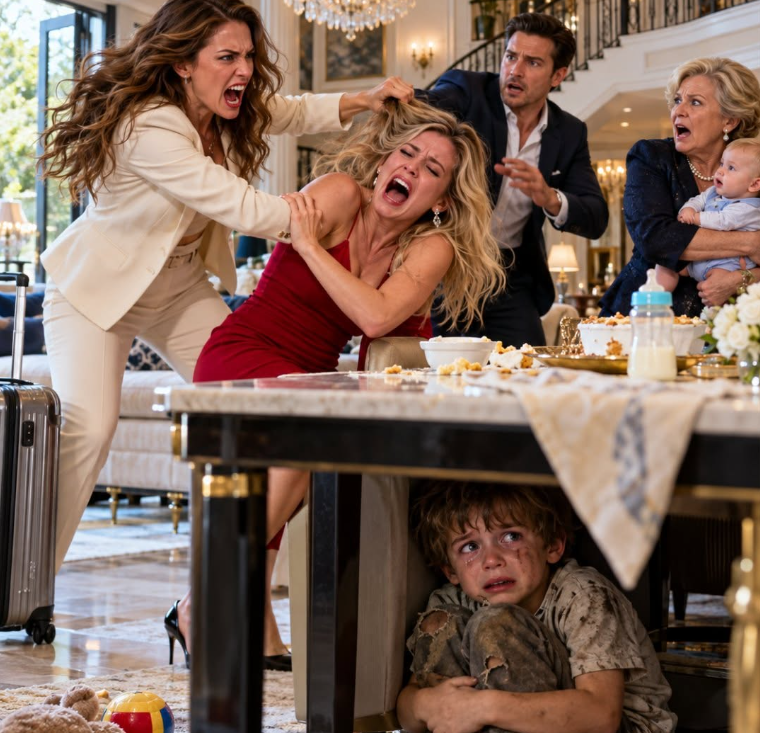
He wrapped his small, sticky hand around her finger, the way he had when he was a newborn, the way he had that first terrible night under the coffee table, the way he probably always would.
"Okay," he said. "Then you can cry. But only happy."
"Only happy," she promised.
People in Atlanta still talk sometimes about the Whitmore heir. The little boy who inherited half of a two-hundred-million-dollar company before he could walk. They talk about the scandal, the trial, the CEO who fell, the board meeting where a woman in a black suit played a recording and changed everything.
But they've got the story wrong.
Because Liam Whitmore Carter's real inheritance was never the shares, or the money, or the tower on the thirty-first floor.
His real inheritance was a mother who came home.
Who didn't scream.
Who knelt down on a cold marble floor, held out one finger, and waited — as long as it took — for her son to find his way back to her.