
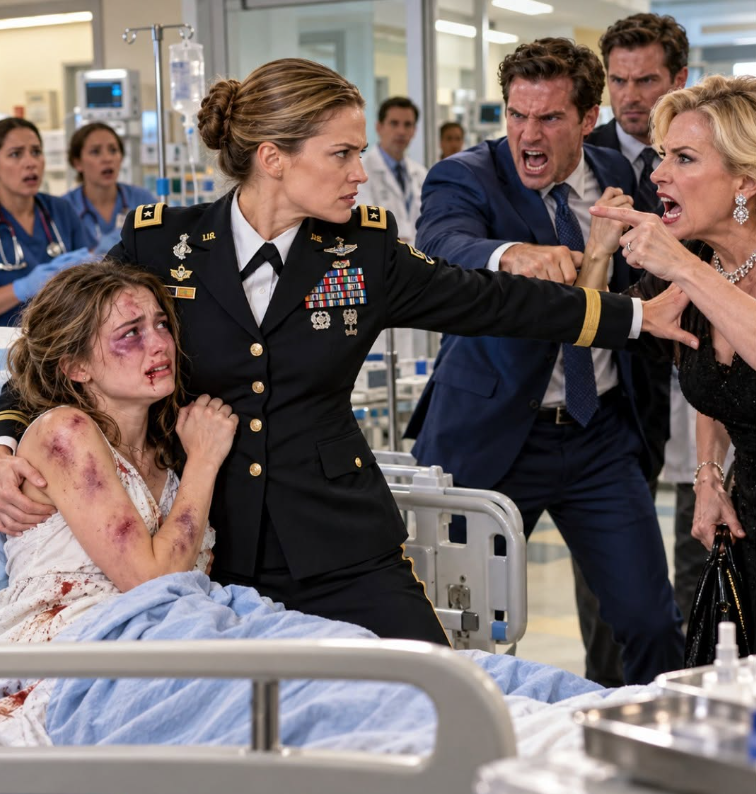
Chapter 14
Patricia wore pearls and a cream-colored suit, looking every inch the grieving, dignified matriarch. Gregory sat beside her, jaw set, scrolling through his phone until the bailiff told him to put it away. Charles Sterling, silver-haired and expensive, arranged his files with the confidence of a man who had never lost a case he truly cared about.
And Nicholas sat at the far end of the table.
He looked terrible. His face was pale and unshaven. His suit hung on him like it belonged to someone else. He didn't look up when we came in.
The gallery behind them was filled with people from Patricia's world. Foundation board members. Country club friends. A few reporters. They watched us walk in, and I heard the whispers.
That's the mother.
The Army one.
Poor Patricia.
Then, behind us, other people began filling the seats.
Grace Holloway, the forensic nurse, on her day off.
Walter, the hospital security chief, in a sport coat that didn't quite fit.
Rosa Delgado, in her faded blue cardigan, with her sister who had driven all night from San Antonio to sit beside her.
And then, one by one, soldiers.
Men and women from my command. Some I had served with twenty years ago. Some who had driven hours to be there. They came in civilian clothes, quietly, without any announcement. They didn't speak to anyone. They simply filled the rows behind my daughter until there were no empty seats left on our side of the courtroom.
I hadn't asked them to come.
Word had spread the way it always does in the Army. Someone knew someone. Someone made a call.
Sergeant Major Tom Reyes, retired, leaned forward from the row behind me and spoke softly.
"Heard the Colonel's girl needed some family, ma'am. Figured we'd show up."
I couldn't answer. I just nodded, and pressed my lips together hard.
Abigail turned around and looked at the rows of strangers who were not strangers at all.
"Mom," she whispered. "Who are all these people?"
"Your family," I said. "The one that shows up."
Judge Evelyn Carter was a slender woman in her sixties with close-cropped gray hair and eyes that missed nothing.
Charles Sterling went first.
He was very good. I'll give him that. He spoke gently, reasonably, with just the right amount of sorrow in his voice. He described Abigail as a fragile young woman who had struggled since joining a prominent family. He presented Dr. Whitfield's notes. He suggested that Abigail's mother, "absent for most of her daughter's adult life due to her military career," had arrived in a moment of crisis and "understandably, but mistakenly" interpreted a tragic accident as something sinister.