
Chapter 18
PART 10
That Friday morning, I walked into the Lockridge farmhouse through the front door.
Carlton opened it for me. He stood aside and said, “Come in, Elnora,” and his voice broke on my name.
I made coffee in Henrietta’s percolator, because no one else knew how it worked. I’d baked biscuits at five in the morning. Rosella came, and Mr. Haskins, and Alfreda, who sat near the end of the table and couldn’t quite look at me yet.
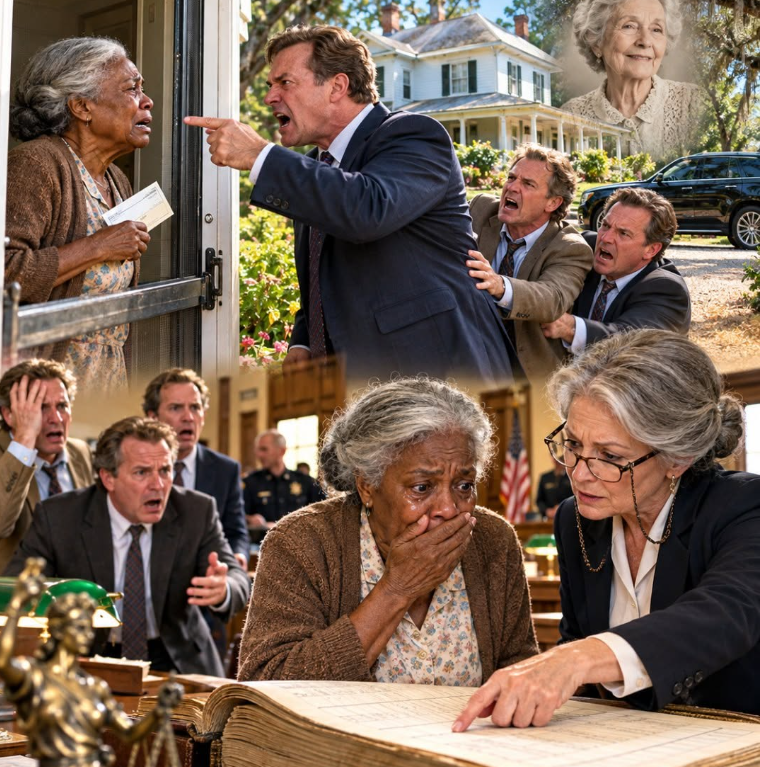
Bertram came in quietly with his lawyer. He’d pleaded to a lesser charge and agreed to testify against his brother; he looked ten years older. Thurston came in last, released on bond, with Preston Vance at his elbow. He didn’t sit. He leaned against the counter, the same place he’d stood drinking his mother’s coffee the morning they shut me out.
Mr. Haskins opened the envelope and read.
Henrietta left the farmhouse and the remaining acreage to Carlton, on the condition that it never be sold to a developer while he lived. Her jewelry, including the sapphire brooch, she left to her granddaughters. To Bertram, she left her Bible, with a note: Read Proverbs. All of it. Twice.
To Thurston, she left one dollar and a sealed letter. He read it standing at the counter. Whatever it said, he folded it into his pocket, walked out the back door, and didn’t look back. Six weeks later, he pleaded guilty to forgery and filing a false report. He was ordered to repay every dollar he took from his mother and the earnest money he owed Duvall, which meant selling his house in Nashville and his boat. The last I heard, he was living in a rented apartment and attending a program for gambling addiction. I pray for him. I do.
Then Mr. Haskins looked at me over his glasses.
“To my friend Elnora Ruthanne Whitsett,” he read, “I leave my kitchen table, my percolator, and the money in my savings account at First Farmers Bank, which I have been putting aside for her since 1960, a little every month, as wages Harlan never paid her mother.”
He told me the amount.
I made him say it twice. Then I had to put my head down on the table where we’d shared biscuits for twenty-six years.
It was enough. Enough to fix the Pruitt house. Enough that I’d never clean another stranger’s floor unless I wanted to. And enough for something else I’d already decided.