
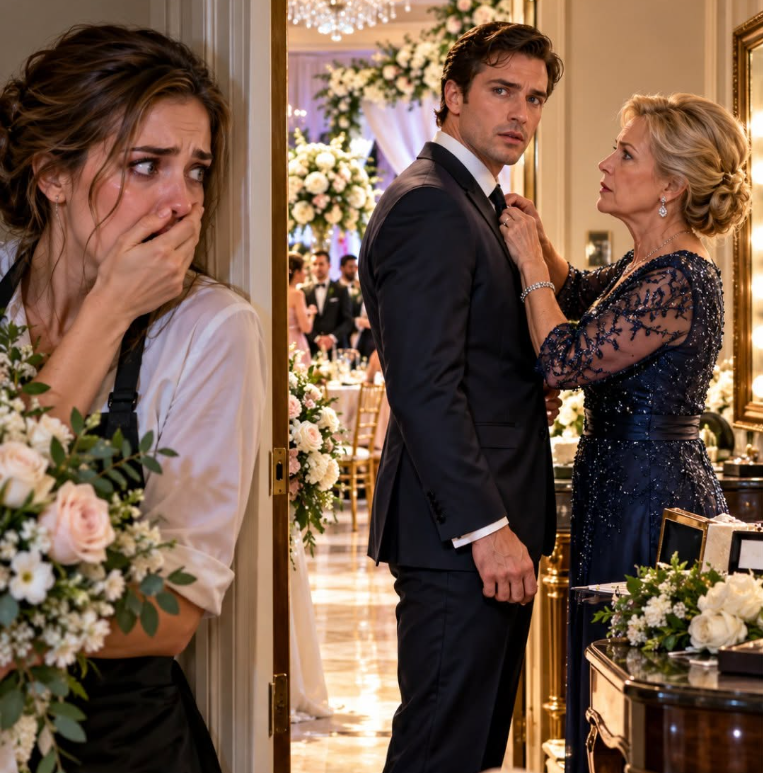
Chapter 3
My assistant, Priya, was waiting by the welcome table with a box of loose eucalyptus in her arms. She took one look at me and set the box down.
“Audrey. What happened?”
“I’ll tell you later. I promise.” My voice sounded strange to me, flat and calm. “Where are the boutonnieres?”
“In the cooler by the groom’s suite. Kendra’s about to take them in.”
Kendra was the coordinator, the one who’d called Evelyn Mrs. Parker. I nodded and reached for a ceremony program from the stack on the welcome table. I needed to see it in print. I needed something solid.
Cream cardstock. Gold lettering.
Together with their families, Sloane Elizabeth Whitmore and Nathan James Parker invite you to celebrate their marriage.
Nathan James Parker.
I read it three times. For one dizzy second, I wondered if I’d lost my mind. Maybe grief had broken something in me. Maybe I’d seen Nathan and my brain had painted Dominic’s face over him because it wanted to so badly.
But Nathan was three inches shorter than his brother, with their late father’s dark hair and a scar through his left eyebrow from a hockey puck in tenth grade. The man in that room had Dominic’s sandy hair. Dominic’s dimple. Dominic’s voice.
I stepped behind a pillar and called Nathan.
He picked up on the second ring. “Audrey? Hey.” He sounded surprised, a little cautious. We hadn’t talked since the funeral, where he’d stood in the back row and left before the reception. He and Evelyn had barely looked at each other that day. “Is everything okay?”
“Where are you right now?”
“My kitchen. In Portland. Grading a stack of truly terrible essays on The Great Gatsby.” A pause. “Why? What’s wrong?”
“Are you getting married today?”
Silence. Then a short, confused laugh. “Am I what?”
I snapped a photo of the program and sent it to him. I heard his phone buzz against his ear. I heard him go quiet.
“Audrey,” he said slowly, “that’s not me.”
“I know.” I closed my eyes. “It’s Dominic.”
“Audrey—”
“I saw him, Nathan. Ten minutes ago. Your mother was fixing his tie. He’s alive, and he’s marrying someone named Sloane Whitmore, and he’s using your name.”
I waited for him to tell me I was confused. That grief does terrible things to people. That I should sit down and drink some water.
He didn’t.
“Oh, God,” he breathed. And the worst part was that he didn’t sound shocked. He sounded like a man who’d just watched an old nightmare walk back through his front door. “Listen to me. Don’t confront him alone. I’m serious. I’m getting on a plane.”