
Chapter 21
Lauren filed for divorce, but she visits Grant every other month. She says he’s teaching GED classes to other inmates.
History, mostly.
The Senate confirmed my nomination in March, sixty-eight to thirty-two. Senator Hargrove voted no. Senator Brooks sent me flowers.
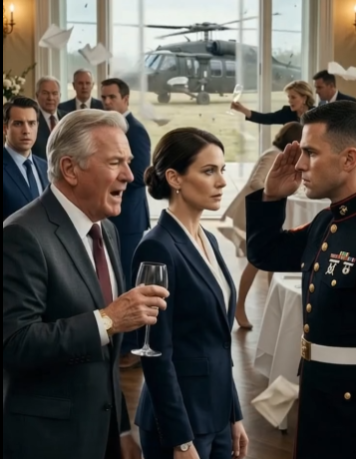
My promotion ceremony was held at the Washington Navy Yard on a cold, clear morning, under a sky so blue it looked painted. The Chief of Naval Operations administered the oath. And when it came time to pin on my fourth star, my father stepped forward.
His hands shook too badly to manage the clasp. For a moment, I saw the old shame flicker across his face.
Then my mother stepped up beside him and gently placed her hands over his. Together, slowly, they fastened the star to my shoulder.
My father stepped back, raised his trembling right hand to his brow, and saluted me.
It was the worst salute I had ever seen in twenty-two years of service.
It was also the most beautiful.
At the reception afterward, Petty Officer Tessa Morales walked across the room on her own two feet, without a cane, her mother beaming behind her. She came to attention in front of me.
“Ma’am. Request permission to say congratulations.”
“Granted. And Petty Officer? Nobody gets to decide what you’re capable of.”
“Except me, ma’am,” she grinned. “I remember.”
Across the room, Elias Ward stood near the window in a gray suit, holding two cups of coffee. He had driven up from Annapolis at five in the morning. He caught my eye and lifted one cup in a small toast.
Aunt Ruth materialized at my elbow, following my gaze with undisguised interest.
“Amelia,” she said, lowering her voice. “Still no husband?”
I took the coffee Elias was walking over to hand me, and smiled.
“Ask me again next spring, Aunt Ruth.”
That evening, after everyone had gone home, I sat on my parents’ back porch with my father. The porch light glowed behind us, the one my mother always left on for anyone coming home late.
“I visited Grant last week,” he said quietly. “He asked about you.”
“I’ll go next month.”
He nodded. For a while, we just watched the stars come out over McLean.
“Amelia,” he said finally. “Do you think it’s too late? For a father to start over?”
I thought about Newport, about the hatch, about a frightened twenty-two-year-old boy who had carried his father’s cruelty for half a century and almost handed it down to his own children.