
Chapter 20
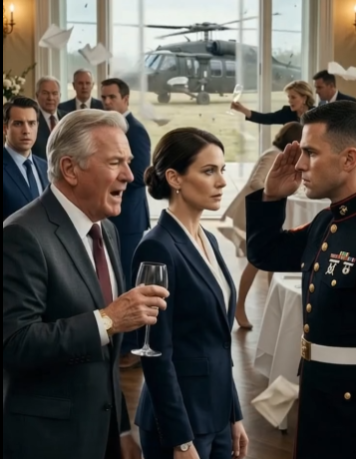
He told them everything. Newport. The hatch. Tommy Pruitt’s burned arms. His own father at the kitchen table. He told them about the Parkinson’s, holding up his shaking hand for the whole room to see, and Aunt Ruth pressed a napkin to her mouth.
“The military didn’t chew my daughter up,” he said, his voice breaking. “It chewed me up. Forty-eight years ago. And I spent every day since trying to make sure nobody I loved ever went through that hatch. I was so afraid of losing her that I pushed her away with both hands.” He turned and looked straight at me. “Amelia went through every hatch I couldn’t. She walked through fire for twenty-two years while her own father laughed. I don’t deserve to be proud of her. But I am. God help me, I am.”
I didn’t realize I was crying until my mother handed me a tissue.
Then he made his announcements. Hayes & Sons would cooperate fully with prosecutors and pay restitution to every injured sailor aboard the Jacob Merrill. He was stepping down as CEO; the company’s longtime operations director, a quiet woman named Patricia Okafor, would take his place. And a portion of every contract for the next ten years would fund a scholarship for children of enlisted sailors.
“It’s going to be called the Tessa Morales Fund,” he said. “If she’ll allow it.”
From a table near the back, a young woman in a wheelchair, her arms still wrapped in compression sleeves, raised one hand.
“She allows it, sir,” Tessa called out.
The room erupted.
Justice moved the way justice usually does: slowly, and then all at once.
In January, Grant pleaded guilty to wire fraud, conspiracy, and making false statements to the federal government. Because he had surrendered the shipping list, helping prevent a potential catastrophe aboard the Whitfield, and because he cooperated in the indictment of the overseas supplier and two other fraudulent contractors, the judge sentenced him to six years in federal prison rather than the twenty prosecutors could have sought.
At sentencing, he turned around in his orange jumpsuit and looked at our father in the gallery.
“It was never you, Dad,” he said. “I’m sorry.”
My father nodded, unable to speak. My mother held his hand.
The Justice Department formally cleared Leonard Hayes in February. Agent Cho called me personally to tell me. Before she hung up, she said, “For what it’s worth, Admiral, I’ve worked a lot of cases involving families. Yours is the first one where I watched people get better instead of worse.”