
Chapter 19
The screen went dark.
For a long moment, nobody in that courtroom moved.
Then my mother stood up.
“She was supposed to leave it to me,” she said. Not loudly. Almost conversationally. As though she were correcting a waiter about her order. “I was her daughter. Not Emily. Me. I’m the one who should have had it. Everything she had should have been mine.”
Kessler sat very still. He knew, as I knew, as everyone in that room knew, that his client had just stopped being a grieving daughter and become exactly what she was.
Judge Morrow denied the petition from the bench. She declared Holloway’s option void. She referred the matter of the twenty-five-thousand-dollar offer to the district attorney for possible charges of witness tampering.
And when we stepped out into the hallway, ADA Paula Whitfield was waiting with two investigators.
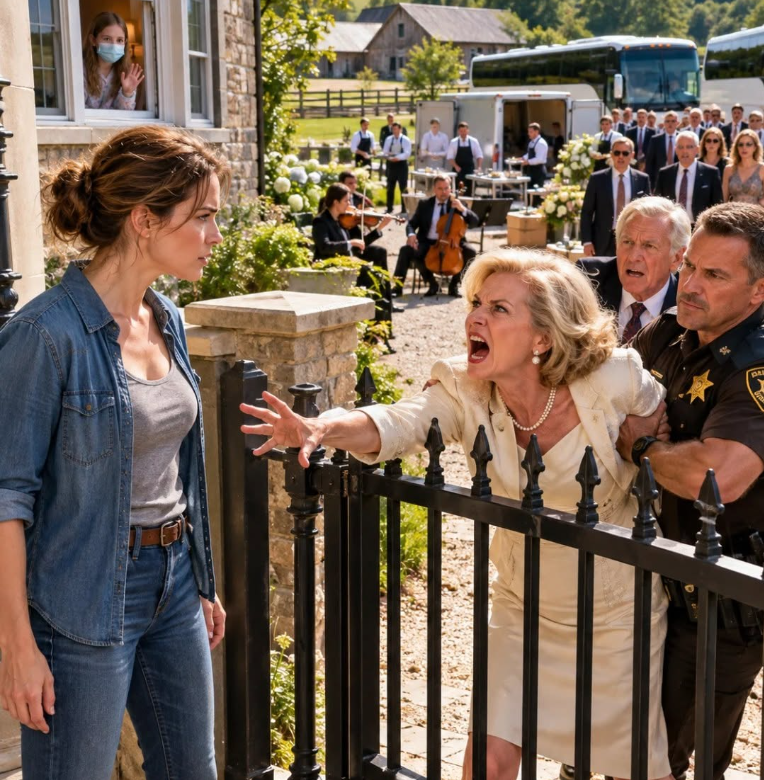
“Margaret Carter,” one of them said, “you’re under arrest for forgery, theft by deception, and filing a false instrument.”
They cuffed her right there, beneath a portrait of some long-dead county judge.
As they led her past me, my mother stopped. The investigator tugged her arm, but she planted her feet and leaned toward me, her voice a whisper only I could hear.
“You think you won,” she said. “Ask your father where the rest of the money went.”
PART 10
I didn’t ask him that day.
I drove home to Lily, who was waiting at the kitchen window with Walt Hensley’s wife, Marjorie—fully vaccinated, masked, and thoroughly vetted by Dr. Shah’s office as an approved sitter. Lily had made me a card out of printer paper. It said WE WON in purple marker, with a drawing of a judge’s gavel that looked suspiciously like a hammer hitting a cow.
“Grandma Ruth was on TV,” I told her that night, tucking her in. “In the courtroom. She said something for you.”
“For me?”
“She said the calves like apples better than carrots.”
Lily’s eyes went wide. Then she grinned. “I knew it. Walt always says carrots.”
Three days later, I asked my father.
He’d come to the porch—he always stayed on the porch—with a box of the oranges Lily liked. I made coffee and sat beside him, and I told him what Mom had whispered in that hallway.
He was quiet for a long time.
“I knew she’d use that,” he said finally. “She’s been accusing me of it for months.”