
Chapter 18
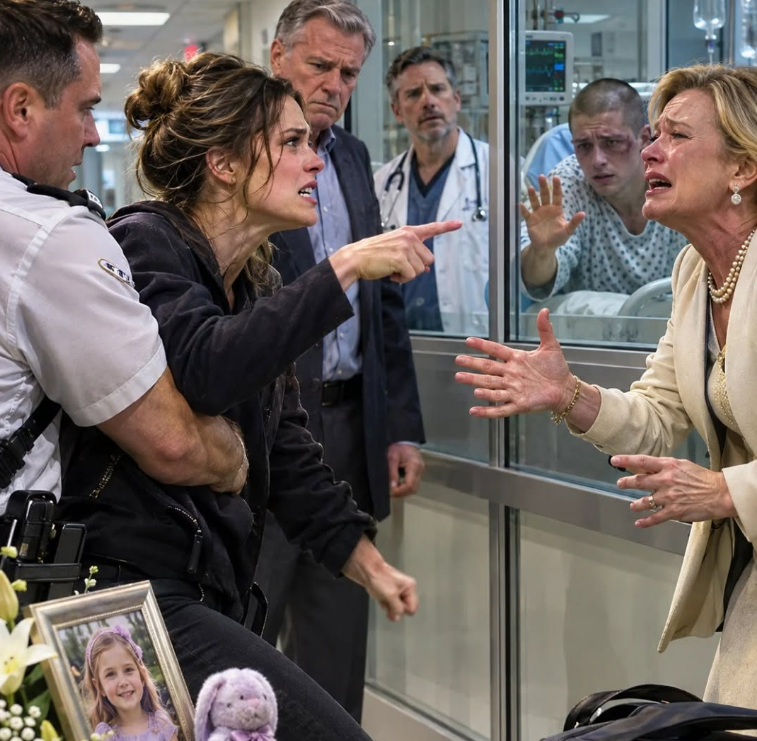
She wasn’t allowed in the unit, but the waiting room was a public space. She sat in the farthest chair, folded her hands in her lap, and stared at the double doors.
Nobody spoke to her. She didn’t speak to anyone.
For three hours, the four of us sat in that room, waiting for the same thing for completely different reasons. I had wondered for years what I would feel if I saw my mother suffering. I had imagined satisfaction. Instead I felt something smaller and sadder. She looked like a woman who had bet everything on one horse and was only now realizing she had never been watching the race.
At 5:20 a.m., Dr. Mehta came through the doors with her mask pulled down around her chin.
“His blood pressure is holding,” she said. “The antibiotics are working. He’s not out of the woods, but he turned a corner about an hour ago.”
Megan collapsed against me, sobbing. My father put his hand over his mouth.
Across the room, my mother closed her eyes. When she opened them, she stood, buttoned her camel coat, and left without a word.
Five days later, Dr. Mehta called me with the words I had been afraid to hope for.
“His white count is climbing. Neutrophils are coming up. Ms. Pierce, your cells have engrafted. They’ve moved in and they’re making a home.”
When I visited that afternoon, Daniel was sitting up and eating green Jell-O like it was a steak dinner.
“Apparently I’m going to have your blood type now,” he said. “Does that mean I’m going to start organizing my spice rack alphabetically?”
“Only if the transplant really worked,” I said.
He laughed so hard the nurse came in to check his monitors.
The probate hearing was held on a gray Tuesday in courtroom 4B of the Cuyahoga County Probate Court. Judge Eleanor Whitfield had white hair, reading glasses on a beaded chain, and a reputation, Owen told me, for not suffering fools.
My mother sat at the opposite table with Gerald Voss, wearing navy blue and her pearl bracelet. She didn’t look at me once.
Gerald Voss went first. He was smooth and confident. He talked about a grieving mother whose memory had been damaged by trauma. He talked about family discretion and the broad powers of a trustee. He suggested, very politely, that I had signed the waiver during a fog of exhaustion and simply forgotten.