
Chapter 20
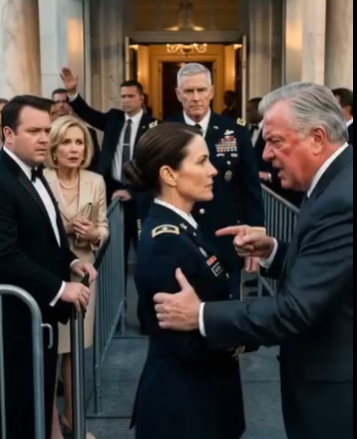
Evelyn stopped in front of me, despite the agent’s hand on her arm. Up close, under the perfect makeup, she looked old. Brittle.
“You were supposed to stay gone,” she said.
“I was never gone, Evelyn,” I said quietly. “I was just somewhere you couldn’t reach.”
They took her out.
The boardroom stayed silent for a long time. Then Gregory Shaw, the trustee, cleared his throat.
“I suppose,” he said dryly, “we should table the motion.”
Things moved quickly after that.
By Monday, the Defense Criminal Investigative Service had briefed the Senate Armed Services Committee. The two panel members on leave were reinstated with a formal apology. The news site that ran the story issued a correction and then, two days later, a front-page article about how the fake emails had been manufactured. The reporter who’d broken the story called me personally to apologize. I accepted. Everybody gets fooled sometimes. What matters is what you do once you know.
General Vance called on Tuesday.
“The Secretary withdrew her request. Your nomination is going back to the full Senate.” I could hear him smiling. “Also, the chairman of the committee asked me to tell you he owes you an apology. He’s not used to saying that. I recommend savoring it.”
The consequences for my father were real, and he didn’t run from them. He resigned as CEO. Mercer Defense Tech withdrew from the Sentinel competition, voluntarily disclosed the fraud, and agreed to pay a significant civil settlement to the government. Every prototype was pulled. Not one soldier ever wore one into the field.
The new interim CEO, chosen by the board with Shaw’s votes, was a retired Air Force engineer with a spotless record. Her first act was dropping the lawsuit against Samuel Okafor. Her second was hiring him back as chief engineer.
“I’m going to build it right this time,” Okafor told me, and I believed him.
Two weeks later, my father and I met at a diner off Route 7. Vinyl booths. Bottomless coffee. The kind of place he’d have sneered at twenty-six years ago.
He looked thinner. Calmer, too. He ordered pancakes and then didn’t eat them.
“There’s something I need to tell you,” he said. “Something I’ve never told anyone.”
I waited.
“After I found out you’d been wounded, I read every report I could get my hands on. About that road in Kandahar. The relay that failed.” He folded his napkin into a careful square. “It was one of ours, Kate. From a subcontractor batch we’d supplied. A bad component. We didn’t make it, but we put our name on it.”