
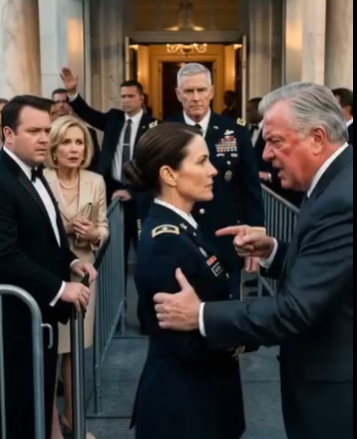
Chapter 6
“Yes.”
“Then you’ll recuse yourself from anything touching Mercer Defense Tech, effective immediately. You’ll forward Dr. Okafor’s letter to the DoD Inspector General, untouched, with a chain-of-custody memo. And you won’t discuss Sentinel with your father, your stepbrother, or anyone at that company.”
“Understood.”
General Vance leaned against the windowsill, arms folded. “You understand what that means, Kate. If this goes where I think it might, you’ll be standing on the sidelines while someone else decides what happens to your father.”
“Especially then, sir,” I said. “If I touch this, any wrongdoing they find gets thrown out the window because the investigator was the defendant’s bitter daughter. I won’t give them that gift.”
Vance looked at me for a long moment. “Twenty years I’ve known you. You’ve never once taken the easy road.”
“The easy road was Wharton, sir. I’ve been avoiding it since I was twenty-two.”
Whitfield drafted the memo while I signed it. He stamped it with the date and time, 1:47 p.m. Lena photographed both pages and sent them to the IG’s office before the ink was dry.
Then we went to the ceremony.
The East Room glowed under its massive chandeliers. Rows of gilt chairs. Cameras along the back wall. Flags. I took my seat in the front row beside two other nominees and tried very hard not to think about the man somewhere behind me.
But memories don’t ask permission.
I was fourteen when my mother died. Margaret Hale Mercer, engineer, laugh like a screen door slamming in summer. Pancreatic cancer took her in five months. Eleven months later, my father married Evelyn Cross, a woman who called me “the girl” in the third person while I sat at the same table. She brought her son Trevor, eight years old, sweet-faced and sharp-eyed, who learned fast that my father’s affection was a prize and that I was competition.
At twenty-two, I told Arthur I wasn’t taking the Wharton seat he’d arranged. I’d already signed with the Army.
I can still see him tearing my commissioning letter in half. Then in quarters. Then letting the pieces fall onto the Persian rug my mother had picked out.
“Walk out that door,” he said, “and you are no daughter of mine.”
I walked out the door.
And then there was 2011.
Kandahar Province. A dirt road at dusk. Our convoy’s relay unit went dead the moment the first blast hit, and for nine minutes we couldn’t call for help. Nine minutes. I lost Sergeant Luis Ramirez and Specialist Dana Cole on that road. I came home with shrapnel in my hip and two folded flags I’d handed to mothers with my own shaking hands.