
Chapter 4
I kept my eyes on the clock. And because my eyes were on the clock, my memory went where it always goes when I stop fighting it.
The noise first. It always starts with the noise. Rotor blades chopping the air, the whole aircraft shuddering, someone shouting coordinates over the radio. Then the jolt. Then the world tilting in a way the world isn't supposed to tilt.
I remember the heat. I remember the ground coming up. I remember Staff Sergeant Tomas Rivera, twenty-six years old, with a daughter named Sofia whose picture he kept tucked in his helmet, grabbing my vest and yelling my name.
I remember the pain along my ribs, bright and total, and thinking very clearly: Oh. So this is how it happens.
And then I remember hands. Strong hands. Daniel Hayes, a major back then, pulling me through wreckage and smoke and noise, talking the whole way, telling me stories, insulting my taste in music, telling me I was too stubborn to quit here, in this place, on this day.
He got four of us out that night. He went back for the fifth. Rivera didn't make it. Hayes carried him out anyway, because we don't leave our people.
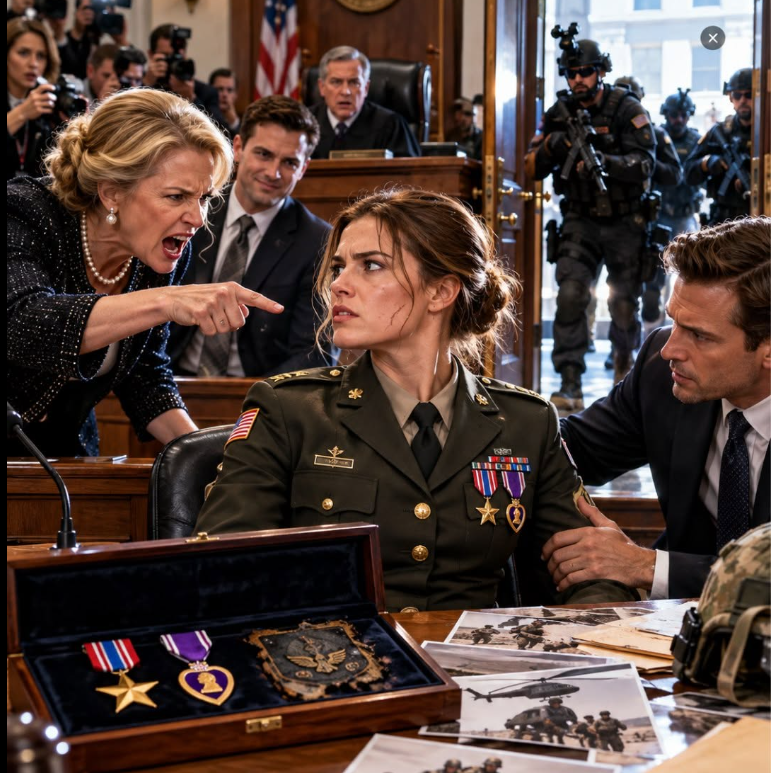
I got a Purple Heart for the scar. I got the Silver Star for what I did in the forty minutes before we went down, which I still can't talk about and wouldn't want to. And I got a debt I have never been able to repay: every morning I wake up is a morning Daniel Hayes handed me.
When I finally came home, eight months later, thin and scarred and carrying a cover story, my mother met me at the airport. She looked at the way I held myself, stiff on one side. She asked what happened.
"Contractor helicopter," I said. "Rough landing. I'm fine."
I watched her decide to believe me. I watched her decide it was easier not to ask again. And maybe I let her, because it was easier for me too.
Now she sat twenty feet away on a witness stand, telling the world my scars were a lie.
And the worst part, the part that kept me up at night during this trial, was that I understood exactly how she'd gotten there. Because I'd built the road for her, one careful silence at a time.
11:57.
Colonel Hayes shifted his weight on his cane. He was standing near the back wall, refusing the seat a bailiff had offered him. Soldiers like him don't sit while they're waiting to go in.