
Chapter 17
So I threw it.
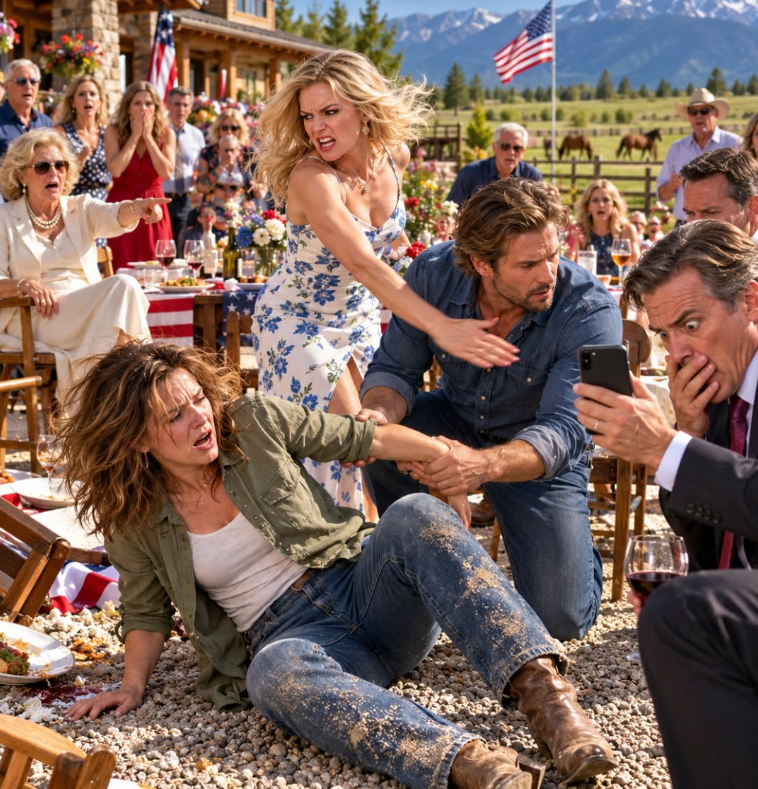
Wade and I spent June getting ready. We fixed the porch steps. We strung lights from the barn to the cottonwoods. And in the spot in the yard where I’d fallen, where the sharp gray gravel had bitten into my palm, Wade tore it all out and planted grass. By July, it was soft and green and cool under bare feet.
“Nobody’s getting knocked onto gravel in this yard again,” he said, wiping his hands. “Not on my watch.”
By mid-afternoon, forty-some relatives filled the yard again. The same faces, mostly. Uncle Ray manning the grill. Cousin Teresa’s kids chasing barn cats. Darrell from Billings with twice as many fireworks as last year, grinning like a kid. Old Mr. Halvorsen in his good hat. Dale Ferris even came, at my invitation, with his sister from the land trust. He was wearing jeans and a work shirt this time, and he looked more comfortable than I’d ever seen him.
But the moment I’ll remember for the rest of my life came right before supper.
My mother stood up from her chair. The same patio chair. The same elegant posture. But she was wearing boots now. Dad’s old ones, resoled, with two pairs of wool socks to make them fit.
She tapped her glass with a fork until the yard went quiet.
“A year ago,” she said, her voice carrying across the grass, “on this exact spot, my daughter Nora was pushed to the ground. And I sat in this chair and told her to apologize.”
Nobody moved. Even the kids went still.
“Forty of you stood here and watched. And I know some of you have felt bad about it all year. But none of you should feel as bad as I do. Because I’m her mother. And I didn’t get up.”
Her voice wavered. She steadied it.
“I’ve spent my whole life afraid of being poor. Afraid of mud and hard work and being looked down on. And because I was afraid, I looked down on the one person in this family who never once looked down on anybody. I’m seventy-five years old, and I finally understand that my daughter Nora is the strongest, kindest, most faithful person I have ever known. Her father knew it. It took me a lot longer.”
She set down her glass.
Then my mother walked across the yard. In front of every relative. Past the grill, past the picnic tables, across the new grass, until she was standing in front of me.