
Chapter 2
Part 2: The Name at the Bottom
The big blue letters above the counter said what they had said for nearly thirty years: WE CARRY OUR OWN.
Every Heron knew those words. They were shouted at formations, printed on T-shirts, and tattooed on more than a few forearms.
But the smaller lines beneath them were the ones almost nobody read.
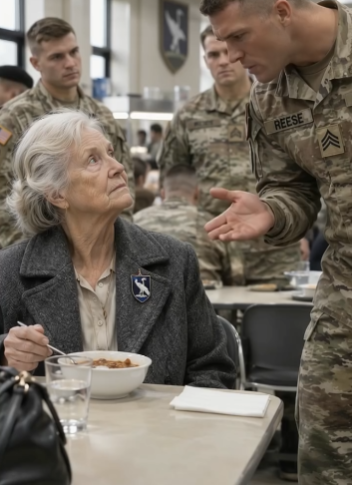
Sergeant Reese read them now, out loud, though I don’t think he meant to.
“This hall is dedicated to the wounded of Landing Zone Crane, May 9, 1970, and to the nurse who would not leave them. By order of the battalion commander, she was made a Heron for life.”
He swallowed.
“First Lieutenant Quinn Braddock. Army Nurse Corps.”
Nobody in that dining hall moved. Somewhere near the back, a tray slid off a table and clattered against the floor, and two hundred heads flinched at once.
Reese turned around slowly. He looked at me the way a man looks at a step he didn’t see in the dark.
“You’re…”
“Quinn Braddock,” I said. “I’d shake your hand, Sergeant, but mine has chili on it.”
One of his companions, a lanky specialist whose name tape read PRICE, let out a breath that might have been a laugh or a prayer. The other one, a sergeant named VANCE, was holding his phone at chest level. I noticed the small red dot in the corner of his screen. He had been recording the whole time.
“Staff Sergeant Reese.”
The voice came from the doorway, low and flat, the kind of voice that doesn’t need to be loud.
Command Sergeant Major Harold Dunmore had walked me from battalion headquarters to my car that very morning. He was a big, gray-headed man with a limp he never talked about and kind eyes he tried hard to hide. Now those eyes were not kind at all.
Reese snapped to parade rest so fast I heard his boots squeak.
“Sergeant Major.”
Dunmore crossed the room. Soldiers parted for him like water.
“Do you know who you’ve been shouting at?”
“I—I just read it, Sergeant Major.”
“You just read it.” Dunmore’s jaw worked. “Three years in this battalion, and you just read it.”
He drew a breath, and I knew exactly what was coming. I had heard that breath in field hospitals and on flight lines. It was the breath before a man gets taken apart in front of everyone he knows.