
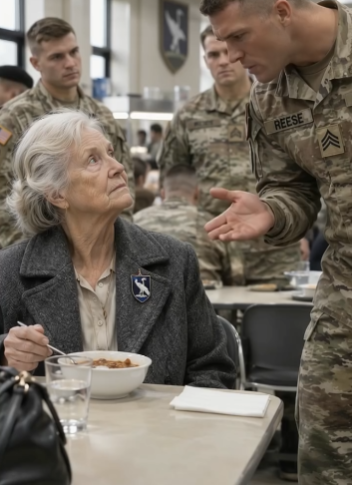
Chapter 6
“Stolen?” Dunmore said.
“Nothing else was touched. Not my jewelry. Not my late husband’s watch. Just that letter.” I kept my voice steady, though it cost me. “And, gentlemen, there is only one other person in the world who has a key to my house.”
Part 4: The Night at Crane
That night, I couldn’t sleep, so I did what I always do when the past gets too loud. I made tea, sat in my kitchen, and let it come.
May 9, 1970.
I was twenty-five. I’d been in the country seven months, working out of an evacuation hospital, and that afternoon I’d been sent forward on a medevac helicopter to stabilize wounded at a small landing zone called Crane. It should have been forty minutes on the ground.
Then the weather closed in, and the shooting started.
By dusk, there were eleven wounded men on stretchers beneath a torn tarp, and one helicopter fighting its way through the clouds. The pilot was a warrant officer named Eddie Navarro, a skinny kid from San Antonio with a crucifix taped to his instrument panel. He had room for six stretchers, maybe seven.
Captain Gordon Pike was in command of the landing zone.
I can still see him, lean and handsome, his face slick with rain. He ordered two litter patients pulled off the helicopter. Then he climbed in himself.
“I have to report to battalion in person,” he shouted over the rotors. “Lieutenant, get aboard. That’s an order.”
I looked at the nine men still lying in the mud.
“No, Captain,” I said.
He stared at me. Then the helicopter lifted, and he was gone.
One soldier stayed with me. A radio operator with big ears and a stubborn mouth. Private First Class Raymond Reese, nineteen years old, from Muncie, Indiana. He told me later that he’d never seen a woman tell an officer no, and he figured if I was crazy enough to stay, somebody ought to be crazy enough to help.
I won’t describe that night. Some things are not for Facebook or for daylight. I’ll only say this: we had nine men, very few supplies, and a long dark. I used everything I had learned and several things I invented. Raymond held flashlights, held hands, and held the line.
At dawn, the relief came. All nine men were alive.
The battalion commander, Lieutenant Colonel Ambrose Hale, arrived on the first helicopter. He walked through that mud, looked at those nine men, and then at me. He unpinned the heron from his own collar and put it in my palm.